The Right Gardening Spade Changes Everything: Match Your Tool to Your Soil
I’ll never forget the spring morning I tried digging a new border bed with my old hand-me-down shovel, only to realize thirty minutes in that I was working three times harder than necessary. The blade was too curved, the handle too short, and my back was screaming. That’s when my neighbor leaned over the fence and said, “You need a proper gardening spade, not a shovel.”
She was right. A gardening spade isn’t just another tool cluttering up your shed. It’s the workhorse that makes challenging tasks like edging beds, transplanting perennials, and breaking new ground actually manageable. The flat, sharp blade slices through soil and roots with precision that rounded shovels simply can’t match.
Here in mid-June 2026, garden centers are stocked with countless spade options, and the choices can feel overwhelming. Do you need a border spade for tight spaces between your established plants? A digging spade for turning over vegetable beds? What about handle length, blade material, or those ergonomic designs that promise to save your lower back?
The difference between struggling through your garden projects and completing them with energy to spare often comes down to matching the right spade type to your specific soil conditions and tasks. Clay soil demands different blade characteristics than sandy loam. Transplanting shrubs requires different leverage than edging a lawn.
This guide will walk you through the four main types of gardening spades, help you understand which features matter for your particular garden, and give you the confidence to choose a tool that’ll serve you well for decades. Because the right spade doesn’t just make gardening easier. It makes it genuinely enjoyable.
Why Your Gardening Spade Matters More Than You Think
Most gardeners grab whatever spade is hanging in the garage and wonder why their back aches after an hour of digging. Here’s the thing: that tool might be working against you.
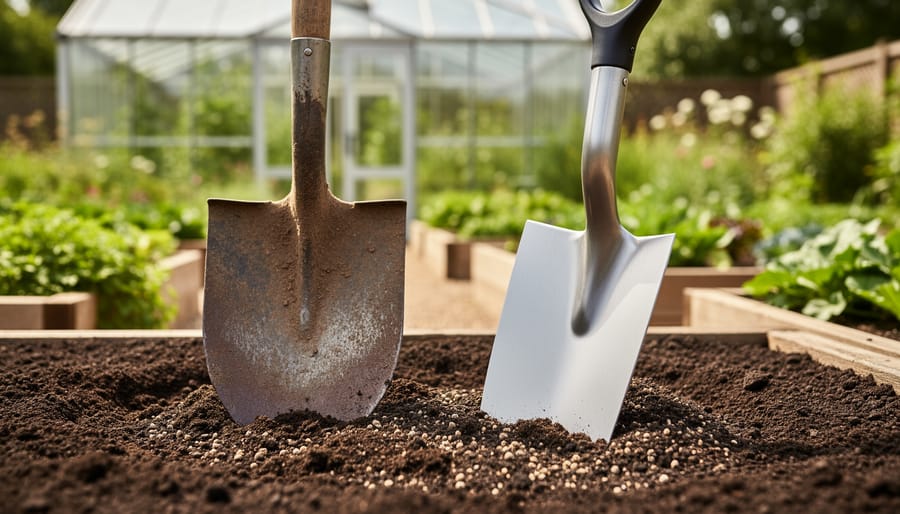
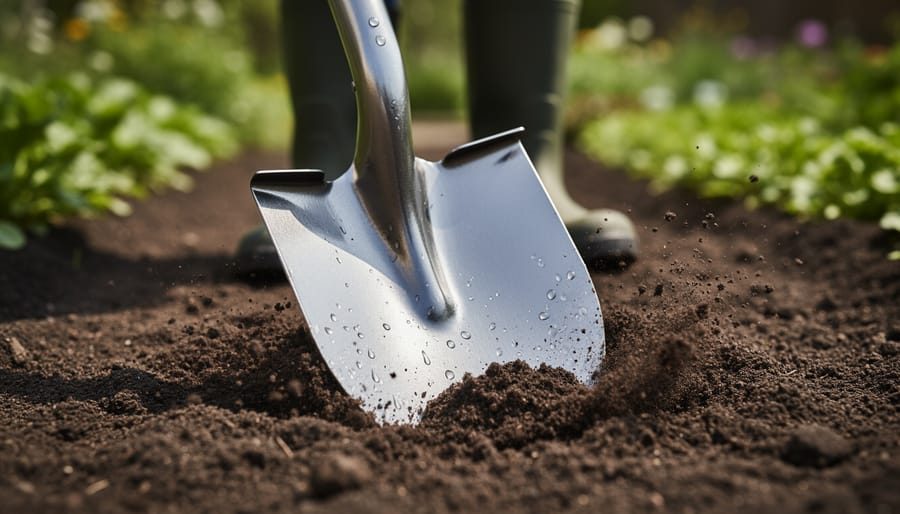
A spade isn’t just a shovel with a different name. While a shovel has a curved, scooped blade designed for lifting and moving materials like mulch or gravel, a spade features a flat, straight blade with a sharp edge built specifically for cutting and slicing through soil. That sharp edge makes all the difference when you’re edging a bed, dividing overgrown perennials, or transplanting shrubs. Choosing a spade over a shovel for precision work means cleaner cuts, less root damage, and far less wasted effort.
The design variations matter even more than you’d expect. Digging spades have flat blades perfect for turning soil, while pointed versions bite into compacted ground that would stop a standard spade cold. Border spades bring the same cutting power in a lighter, more maneuverable package for tight spaces. Each type exists because specific tasks and soil conditions demand different approaches.
Using the wrong spade forces you to compensate with extra force, awkward angles, and repeated attempts. The right one slices through the job with half the effort. Your knees, back, and shoulders will thank you, and you’ll finish spring bed preparation or fall transplanting in far less time. That’s not a small thing when you’re trying to get dozens of tasks done before the weather turns.
The Four Essential Types of Gardening Spades
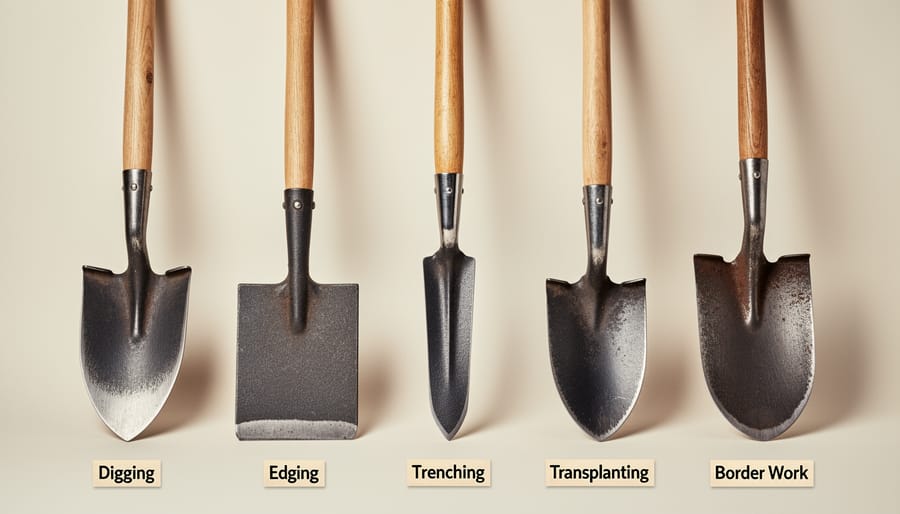
Digging Spades: Your Soil-Turning Workhorse
Think of the digging spade as your reliable daily driver. I’ve worn out two of these over the years because they handle the bulk of garden work, from turning over compost to preparing vegetable beds each spring.
Digging spades have flat blades that slice cleanly into soil, making them exceptionally effective for moving and turning earth. That straight edge lets you dig precise trenches for planting rows or cut clean lines when edging beds. The flat surface also means you can push the full blade depth into the ground with less effort than you’d expect, particularly when you’re working moderately moist soil in early morning.
This is your go-to tool for general garden tasks. When I’m preparing my vegetable patch in late March, my digging spade does about 80 percent of the heavy lifting. It turns last season’s mulch into the soil, breaks up winter-compacted ground, and creates planting holes for tomatoes and peppers.
Where digging spades truly shine is in regular, season-after-season soil cultivation. If your garden features reasonably workable soil without excessive rocks or roots, this type handles everything from shallow cultivation to deep bed preparation. The larger blade surface moves more soil per scoop than its specialized cousins, which speeds up bigger projects considerably.
Border Spades: Compact Power for Tight Spaces
I discovered the beauty of border spades while trying to plant delphiniums in an already-packed perennial bed. My full-sized digging spade kept bumping into established hostas and coneflowers, making what should’ve been a simple task feel like a spatial puzzle. That’s when I borrowed my neighbour’s border spade and everything changed.
Border spades feature the same flat blade design as their larger cousins, but they’re intentionally smaller and lighter. While border spades do a similar job to digging spades when it comes to turning and moving soil, they excel where space is at a premium. The reduced blade width, typically around 6 to 7 inches compared to a standard 8 to 9 inches, lets you work between plants without disturbing roots or crushing foliage.
The lighter weight is a genuine advantage beyond just manoeuvrability. After an hour of working in tight quarters, your shoulders and back notice the difference. I now reach for my border spade whenever I’m dividing perennials, adding spring bulbs to established beds, or doing any detailed work along pathways and foundation plantings. It’s become my go-to tool for precise garden work where control matters more than moving large volumes of soil.
Pointed Spades: Tackling Tough, Compacted Ground
I’ll never forget the spring I tried to establish a new bed in the patch of ground where my old shed had stood. Every thrust of my standard digging spade bounced off the compacted soil like I’d hit concrete. My neighbor leaned over the fence and handed me a pointed spade, and suddenly I was making progress. The difference felt like magic, but it was just smart tool design.
Pointed spades feature a curved blade with a pointed edge, a shape engineered specifically for breaking through resistant ground. That tapered tip concentrates your downward force into a smaller surface area, letting the blade pierce hard-packed soil, clay seams, and even ground studded with small stones. Where a flat blade meets resistance across its entire width, a pointed edge finds the path of least resistance and opens the soil ahead of it.
If you’re working soil that hasn’t been cultivated in years, preparing a new garden bed in compacted earth, or dealing with ground that dries rock-hard between rains, pointed spade types will save your back and your patience. They’re the difference between spending an afternoon fighting the ground and actually getting the bed ready for planting.
Transplanting Spades: Precision for Root Work
I learned the value of a transplanting spade the hard way one spring when I lifted a beloved hosta only to watch half its roots tear away. The problem wasn’t my technique, it was my tool. A standard digging spade simply doesn’t have the precision needed for moving established plants without inflicting damage.
Transplanting spades solve this problem with their sharp, jagged blade design. Those serrations do something flat-bladed spades can’t: they slice cleanly through dense root systems rather than crushing or tearing them. When you’re lifting perennials that have been growing in the same spot for years, those clean cuts make the difference between a plant that bounces back quickly and one that sulks for half the season.
The narrower blade profile also matters. You can dig closer to the plant’s crown without destabilizing it, creating a tighter rootball that holds together during the move. This precision makes transplanting spades particularly useful for dividing overcrowded perennials in early spring or fall, when you need to separate root systems without shredding them.
If you regularly move plants around your garden or divide perennials, this specialized spade earns its place in your tool shed. It’s the difference between successful transplants and disappointing losses.
Matching Your Spade to Your Soil Type
Clay Soil: Choose Strength and Sharp Edges
Clay beats up the wrong spade faster than any other soil type. If you’ve wrestled with heavy, dense clay after a spring rain, you know it clings to everything and resists every thrust. This is where pointed spades earn their keep. Their curved blades with pointed edges slice through compacted clay far more effectively than flat-bladed alternatives, cutting rather than pushing against the dense mass.
The sharp edge matters enormously here. Clay demands a spade that penetrates on the first push, not one that bounces off or requires you to jump on the tread repeatedly. Knowing your plot helps you choose wisely: if your soil forms hard clumps when dry and sticky mud when wet, invest in a pointed spade with a forged steel blade. The extra strength prevents bending when you hit an unexpected chunk of hardpan.
Look for a sturdy foot tread too. Working clay means applying serious downward force, and a comfortable tread distributes that pressure across your boot. Your back will thank you when autumn bed preparation rolls around and the clay starts to compact after summer’s end.
Sandy and Loamy Soil: Speed and Efficiency
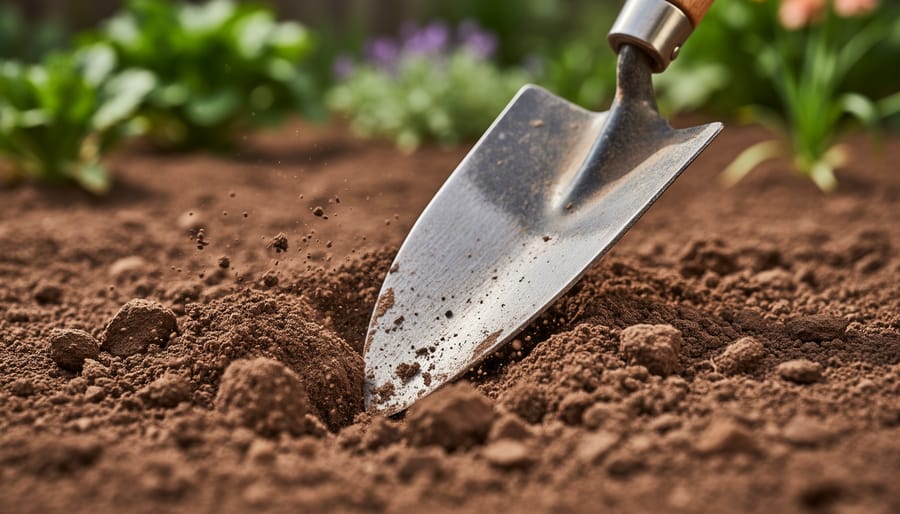
If you’re blessed with sandy or loamy soil, congratulations. You’ve got the gardening equivalent of an open highway, and a standard digging spade will breeze through it. The flat blade slices cleanly through these lighter soils without the resistance you’d face in clay, letting you turn beds, dig planting holes, and mix in amendments in half the time. I can prep an entire raised bed in loose loam before lunch, something that would take me all afternoon in my heavier clay patches.
For smaller garden beds or if you tire easily, a border spade offers the same smooth cutting action with less weight to swing around. It won’t scoop quite as much soil per thrust, but in forgiving sandy or loamy ground, you can work faster with the lighter tool. The reduced blade size also gives you better control when working around established plants.
The key advantage here is speed. These soils don’t fight back, so you can focus on precision rather than brute force, making spring bed preparation or fall cleanup remarkably efficient.
Rocky or Root-Filled Ground: Durability First
I learned this lesson the hard way after snapping the blade of a cheap spade on a root-riddled patch behind my shed. When you’re facing rocky soil or ground tangled with old roots, durability isn’t optional. Look for a pointed spade with a thick, forged blade rather than stamped steel, which can bend or crack under pressure. The pointed edge helps you work around obstacles, but the real test is whether the blade can withstand repeated strikes against stones without losing its edge or shape. Check that the socket connecting blade to handle is reinforced, because that’s often the first point of failure when you hit something solid. A sturdy foot tread matters too since you’ll be putting your full weight behind each push to break through tough ground.
What to Look for When Buying a Gardening Spade in 2026
Walking into a garden center this spring, I watched a gardening beginner lift three different spades before finding one light enough to control. That moment reminded me how personal this choice is. Your height, strength, and the specific work you’ll tackle all shape what makes a spade right for you.
Start with the blade. Stainless steel resists rust and slides through moist soil more smoothly than carbon steel, though it costs more. Carbon steel holds a sharper edge longer but needs more maintenance. Run your finger along the cutting edge before buying; a factory-sharp blade saves hours of frustration when you’re slicing through turf or root-bound perennials. Check the blade’s thickness too. Heavier gauge steel survives rocky ground and prying work, while thinner blades reduce fatigue during long transplanting sessions.
Handle length matters more than most people realize. A spade shaft should reach your hip or lower ribcage when standing upright. Too short and you’ll strain your back with every thrust. Too long and you lose leverage. I’m 5’6″, and standard-length handles work perfectly for me, but my 6’2″ partner needs long-handled versions to avoid constant bending. Wood handles offer traditional feel and absorb vibration, while fiberglass and steel won’t splinter or crack under heavy use.
Look for a generous foot tread, the flat step at the top of the blade. This small platform makes an enormous difference when you’re driving the spade into hard ground hour after hour. Your boot has a solid surface to press against instead of the narrow blade edge.
Weight deserves serious consideration. Lighter spades reduce arm fatigue during detailed bed work and transplanting, making border and transplanting spades excellent choices for extensive projects. Heavier models provide momentum when breaking through compacted clay but tire you faster. Lift several types and imagine using each one for thirty minutes straight.
Test the grip if possible. Your hand should close comfortably around the handle, whether it’s a D-grip, T-grip, or straight shaft. That comfort translates directly to how many hours you’ll happily spend working your summer beds.
Common Gardening Tasks and the Best Spade for Each
Looking at my summer garden calendar, I’m always surprised by how many different jobs need doing, and each one goes smoother when I match the task to the right spade. Here’s what I’ve learned works best after years of switching between tools mid-project.
- Creating Clean Bed Edges
- A standard digging spade excels here thanks to its flat, sharp blade that slices through turf and roots in one smooth motion. Hold it vertically and step down firmly for crisp lines that define your borders.
- Transplanting Perennials and Shrubs
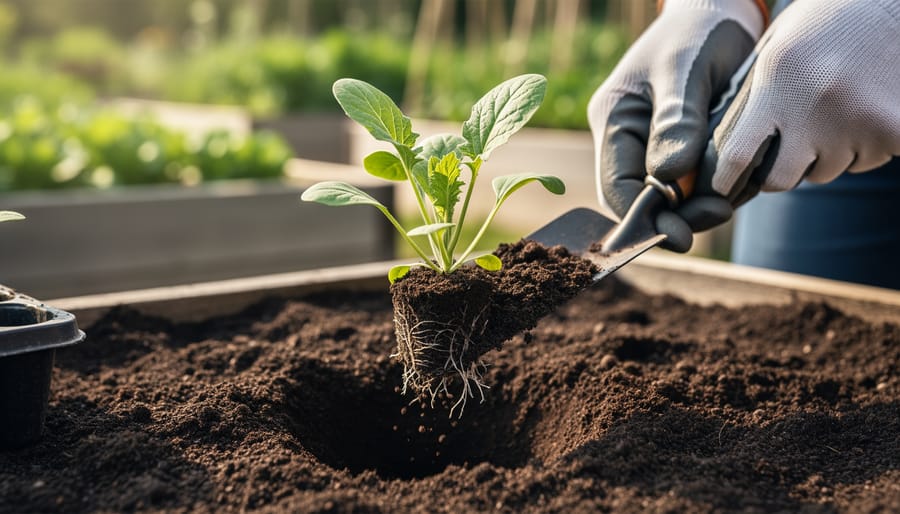
- The transplanting spade’s jagged blade minimizes root damage as you lift plants, making it the clear winner for moving hostas, daylilies, or anything you want to survive the move intact.
- Preparing New Beds or Turning Compost
- Digging spades move and turn soil faster than any other type, whether you’re breaking ground for vegetables or working material from your compost bin into tired beds.
- Working in Tight Raised Beds
- Border spades shine in confined spaces like square foot gardening setups, where their smaller blade lets you maneuver without damaging neighboring plants.
- Dividing Overgrown Perennials
- Grab your digging spade in spring or fall and drive it straight down through the rootball. The flat blade cuts through dense crowns of ornamental grasses, irises, and daylilies cleanly.
- Breaking New Ground in Compacted Areas
- Pointed spades penetrate hard soil that would deflect a flat blade, making them essential for establishing beds in untouched lawn areas or clay-heavy spots.
I’ve stopped trying to make one spade do everything. When I’m edging paths in early spring, I reach for my digging spade. Come June, when I’m tucking new plants into crowded borders, the border spade saves my back and my existing plantings. If you rotate through these common tasks seasonally, having the right spade on hand transforms frustrating work into satisfying progress.
I still remember the afternoon I finally swapped my old, blunt spade for one matched to my clay soil. What had been an hour of backbreaking frustration became 20 minutes of steady, satisfying work. That’s the difference the right spade makes.
You don’t need a shed full of tools. You need the one that fits your garden’s reality: your soil type, your most common tasks, the space you’re working in. A pointed spade for compacted ground saves your back and your patience. A transplanting spade protects roots you’ve spent months nurturing. A border spade turns tight corners into opportunities instead of obstacles.
As we move deeper into summer 2026, there’s no better time to assess what’s in your toolshed. If you’re fighting your spade instead of working with it, you’re making gardening harder than it needs to be. The rows you’ll dig, the perennials you’ll divide, the beds you’ll edge over the coming months deserve a tool that pulls its weight.
Invest in a spade that matches how you actually garden, not just any spade. Clean off that blade, sharpen the edge if needed, and step into your summer projects with a tool that feels like an extension of your hands rather than a burden in them. Your garden will thank you, and so will your shoulders.