How the USDA Gardening Zones Map Decides What Lives or Dies in Your Garden
The USDA Plant Hardiness Zone Map divides North America into 13 zones based on average annual minimum winter temperatures, giving gardeners a reliable starting point for choosing plants that will survive in their climate. Each zone represents a 10-degree Fahrenheit range, with further half-zone divisions offering even more precision. This map has been the gold standard for American gardeners since 1960, most recently updated in 2023 to reflect shifting climate patterns.
I learned the importance of zones the hard way during my first winter gardening. I’d planted a gorgeous lavender variety in my Michigan garden without checking its hardiness rating, convinced that any lavender would thrive with enough care. February proved me wrong. The plant didn’t just struggle; it turned to mush. That expensive mistake taught me what experienced gardeners already knew: you can’t outsmart your zone with wishful thinking.
Understanding your USDA zone transforms gardening from guesswork into informed decision-making. Instead of wondering whether that stunning Japanese maple will survive your winters, you’ll know before you dig the hole. The map accounts for the single most limiting factor in outdoor gardening: how cold it gets when temperatures drop to their yearly low.
But here’s what many gardeners miss: zones tell only part of the story. They measure winter cold, not summer heat, humidity, rainfall, or those surprise late-spring frosts that can devastate a vegetable garden overnight. A gardener in coastal Zone 9 California faces completely different growing conditions than someone in Zone 9 Florida, despite sharing the same hardiness designation.
This guide will show you how to find your exact zone, interpret what those numbers actually mean for your garden, and use the map alongside other climate factors to make smarter planting choices year-round.
What the USDA Plant Hardiness Zone Map Actually Tells You
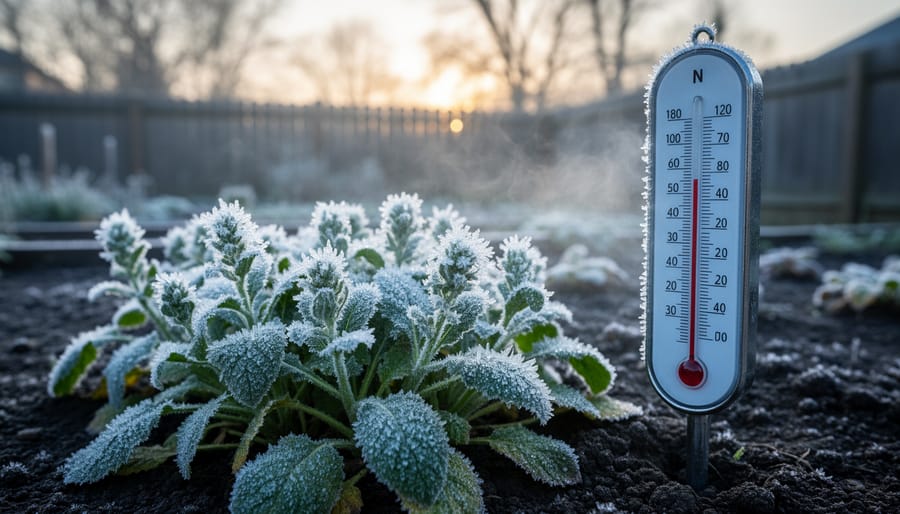
The USDA Plant Hardiness Zone Map is the standard by which gardeners and growers determine which perennial plants are most likely to thrive at a location. Published by the United States Department of Agriculture, it’s the definitive reference that nurseries, seed companies, and garden centers use when they label a plant “hardy to zone 5” or “suitable for zones 7-10.” When you see those numbers on a plant tag, they’re speaking the USDA’s language.
What makes this map so authoritative is what it measures: extreme minimum temperatures. The USDA doesn’t guess at general climate or average winter conditions. Instead, it maps the coldest temperature each area typically experiences, based on decades of weather data from thousands of stations across the country. Each zone represents a 10-degree Fahrenheit range of minimum temperatures, giving gardeners a reliable baseline for what kind of cold their plants will need to survive.
In practical terms, your zone number tells you which perennials, trees, and shrubs can survive winter in the ground where you garden. A plant rated for zone 5 has proven it can handle winter lows between -20°F and -10°F. Plant that same specimen in zone 4, where temperatures drop to -30°F, and it’ll likely freeze to death before spring. Plant it in zone 7, where winters are milder, and it should sail through with no problem.
This is why the zone map matters most for plants that stick around year after year. Annuals die with the first frost regardless of your zone, so their tags rarely mention hardiness. But that Japanese maple, those peonies, that lavender bush, they’re long-term investments, and your zone number is the first filter for knowing whether they’ll make it.
The map gives you a starting point, a shared vocabulary between you and every other gardener working with the same winter reality. It won’t tell you everything, but it tells you the most critical thing: can this plant survive the coldest night my garden throws at it?
Reading Your Zone Map: From Downloads to Real Garden Decisions
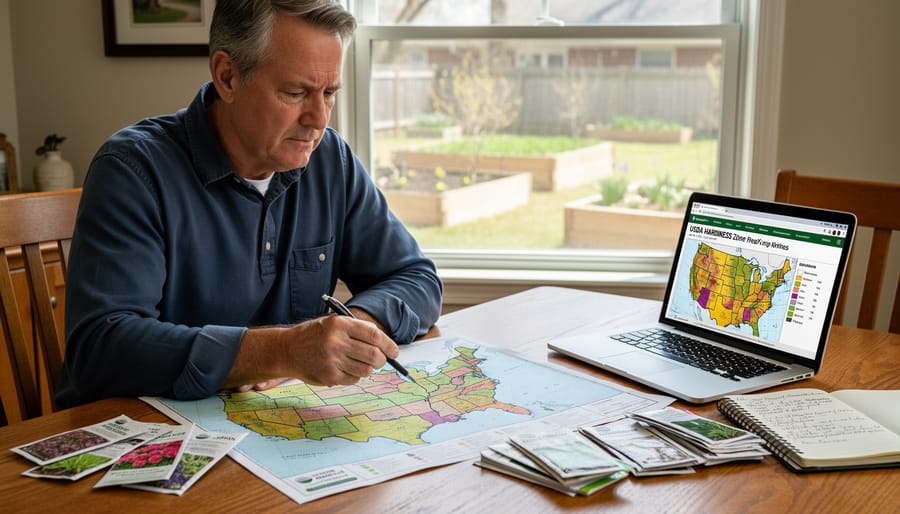
The USDA Plant Hardiness Zone Map lives online, free for anyone to use, and getting your hands on it takes about thirty seconds. Head to the USDA’s Plant Hardiness Zone Map website, where you’ll find downloads for state, regional, and national maps. These come as PNG files in two resolutions, 150 dpi for quick reference on your phone or tablet, and 300 dpi if you want crisp detail for printing and hanging in your potting shed.
Start with your state map. It loads faster than the national version and gives you enough detail to pinpoint your neighborhood without squinting at a continent-wide color gradient. Each zone appears as a distinct color band, numbered from 1 (coldest) through 13 (warmest), with “a” and “b” subdivisions marking 5°F differences within each zone. If you live near a zone boundary, say, where the purple of Zone 6b meets the blue-green of Zone 7a, zoom in. Your actual zone might shift from one side of town to the other.
Here’s where the map moves from pixels to real decisions. Once you’ve identified your zone number, write it down. Keep it in your phone’s notes or on a sticky note in your wallet. You’ll reference it every time you shop for perennials, trees, or shrubs. That “hardy to Zone 5” label on a hydrangea? It means the plant should survive your coldest winter nights if you’re in Zone 5 or warmer. Plant it in Zone 4, and you’re gambling.
The map doesn’t require a botany degree to interpret. Colder zones have lower numbers, warmer zones have higher numbers. Your zone tells you the average extreme minimum temperature range for your area over a thirty-year period, the coldest it typically gets in a bad winter, not the coldest night on record.
Understanding Zone Numbers: What They Mean for Your Plants
The USDA zone system runs from Zone 1 (the coldest) to Zone 13 (the warmest), with each number representing a 10°F range of average annual extreme minimum temperatures. Zone 1 handles winters where temperatures plummet to -60°F or colder, while Zone 13 covers tropical areas that rarely dip below 60°F.
Here’s where it gets more useful: each zone splits into “a” and “b” subdivisions, creating half-zones that narrow the range to 5°F increments. Zone 5a, for instance, covers -20°F to -15°F, while Zone 5b spans -15°F to -10°F. That 5-degree difference matters when you’re deciding whether a borderline perennial will make it through winter or become an expensive annual.
| Zone | Temperature Range | Example Locations |
|---|---|---|
| 3b | -35°F to -30°F | Northern Minnesota, Maine |
| 5b | -15°F to -10°F | Chicago, Boston |
| 7a | 0°F to 5°F | Virginia, Oklahoma City |
| 9b | 25°F to 30°F | South Florida, Southern California |
Lower zone numbers mean colder winters and tougher survival conditions for plants. A gardener in Zone 3 needs plants that can handle deep freezes and extended cold periods. Higher numbers indicate milder winters where tender perennials survive with little protection. If you’re in Zone 9, you can grow citrus and bougainvillea outdoors year-round, but you’ll struggle with plants that need winter chill hours.
When a plant tag says “hardy to Zone 5,” it means that plant should survive winter lows down to -20°F. It will also thrive in any zone with a higher number (warmer winters), but it might not get the cold dormancy period it needs in zones much warmer than its native range.
The half-zone precision helps you make smarter choices at the garden center. That Japanese maple rated for Zone 6a might risk winter damage in your Zone 5b garden, while one hardy to Zone 5a gives you a safety margin. Those 5-degree increments represent the difference between watching a new tree leaf out in spring or finding it dead.
Beyond Borders: How Canada Uses the Same System
If you’ve ever browsed Canadian gardening catalogs or chatted with gardeners north of the border, you’ve probably noticed something reassuring: they’re using the same zone language you are. Canada’s Plant Hardiness Zone Map isn’t some mysterious metric conversion, it’s built on the same foundation as the USDA system, measuring extreme minimum temperatures to predict which perennials will survive winter.
The Canadian map, currently in its 4th edition, mirrors the USDA’s approach but tailors it to the country’s vast climate range. Where US zones typically span 2 through 11, Canadian zones run from 0 (think Arctic tundra) down to 9 (the mildest coastal areas of British Columbia). That zone 0 designation covers territory so cold that few perennials can survive, while zone 9 regions enjoy winters mild enough for plants that would struggle in most American gardens.
This system was specifically updated for perennial plant survival across Canada’s diverse geography, from prairie provinces to maritime coasts. The practical upside? If you’re shopping from a Canadian nursery or seed company and see “hardy to zone 5,” you can trust that rating just as you would from a US source. The temperature ranges align.
For gardeners near the border, this compatibility is more than convenient, it’s genuinely useful. A Michigander can learn from an Ontario gardener’s experience in the same zone, and a Vermonter can confidently order from a Quebec nursery. The shared language of zones creates a cross-border gardening community where knowledge and plant recommendations flow freely, rooted in the same cold-hard data about winter survival.
What Your Zone Can’t Tell You (And Why That Matters)
Your zone number tells you the coldest winter temperature your garden will likely face. But that’s all it tells you. The USDA map doesn’t measure summer heat, humidity levels, rainfall patterns, or how long your growing season lasts. It ignores soil type entirely. A Zone 7 garden in Seattle with cool summers and steady rain operates nothing like a Zone 7 garden in Oklahoma with blistering heat and drought.
I learned this the hard way when I moved from the Pacific Northwest to the Southeast, both supposedly in the same zone. Plants that thrived in my old garden withered in the humidity and summer heat of my new one, even though winter temperatures were nearly identical. The zone number stayed the same, but everything else changed.
Summer heat matters as much as winter cold for most plants. A perennial rated hardy to Zone 5 might survive winter in Denver but struggle through a humid Virginia summer in the same zone. Tomatoes, peppers, and heat-lovers need warmth to set fruit, information your zone number won’t give you. Some gardeners look to the AHS Heat Zone Map for this piece of the puzzle, though it’s less commonly referenced than the USDA zones.
Rainfall varies wildly within zones. Gardeners in the arid West often need irrigation systems and drought-tolerant plants, while those in the Southeast battle excess moisture and fungal diseases. Your zone number can’t predict whether you’ll water twice daily in summer or deal with root rot from standing water.
Soil conditions matter enormously. Clay holds moisture and drains slowly. Sand dries out fast. Rocky soil warms quickly but offers little fertility. You can share a zone with someone whose soil behaves completely differently, and the same plants will perform differently as a result. That’s where practices like raised bed gardening or adopting no till for soil health can help you work with what you have rather than against it.
Microclimates create zones within zones. A south-facing wall absorbs heat and creates a warmer pocket. Low spots collect cold air and frost settles there first. Wind exposure changes everything. I’ve seen figs survive in sheltered urban courtyards a full zone colder than their official rating.
The zone map is your starting point, not your finish line. Use it to eliminate plants that can’t handle your winters, then know your plot by observing summer conditions, testing your soil, and noting where frost lingers or heat concentrates. The best gardens grow from zone knowledge combined with local reality.
Putting Your Zone to Work: Practical Plant Selection
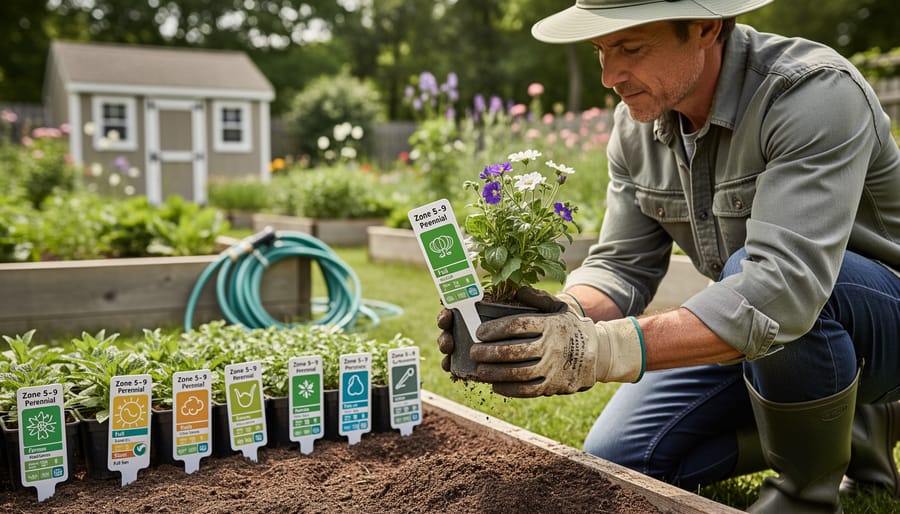
Knowing your zone is one thing, shopping with that knowledge is where the magic happens. When you’re browsing the nursery or scrolling through online catalogs, your zone number becomes your first filter, separating the plants that will reward your care from those destined to disappoint.
Start with the plant tag or catalog description. Look for phrases like “hardy to zone 5” or “zones 4-8.” That first number tells you the coldest zone where the plant can survive winter. If your zone number is equal to or higher than that minimum, you’re in business. For example, a perennial labeled “hardy to zone 5” will thrive in zones 5, 6, 7, and beyond, it can handle your winters. A plant marked “zones 5-9” gives you both boundaries: it needs winters at least as cold as zone 5 (or it won’t get the dormancy it requires) and can’t handle summers hotter than zone 9.
Spring planting gives you an advantage. Your perennials, trees, and shrubs have the entire growing season ahead to establish roots before facing their first winter in your garden. This matters especially if you’re pushing zone boundaries or working with bare-root stock. In colder zones, wait until soil temperatures warm and frost risk passes, rushing in March when you’re eager can backfire. In warmer zones, spring’s mild temperatures offer ideal conditions before summer heat arrives.
Fall planting works beautifully for woody plants and many perennials, particularly in zones 6 and warmer. Cooler air temperatures reduce transplant stress while soil stays warm enough for root growth. Give plants at least six weeks before your average first hard freeze, they need time to settle in. In zone 3 or 4, spring planting is often safer unless you’re working with extremely cold-hardy natives.
When selecting specific plants, cross-reference your findings with proven performers. If you’re in zone 8, exploring zone 8 plants that others have grown successfully saves you trial-and-error heartbreak. And if you’re new to this, reviewing planting basics ensures you’re giving even the right plant the right start. Your zone opens the door, but proper planting technique gets plants through it.
Zone Shifting: What Changing Climates Mean for Your Garden
The USDA updates its hardiness zone map periodically based on accumulating temperature data, and the differences between editions tell a clear story. When the 2012 map replaced the 1990 version, many areas shifted half a zone warmer, meaning gardeners who’d been in zone 6a suddenly found themselves reclassified as 6b. That’s a five-degree difference in average extreme minimum temperature, which opens the door to plants that would’ve been risky bets before.
For your garden, this shifting landscape presents both opportunity and uncertainty. Perennials that once needed coddling through winter might now sail through unbothered. You can experiment with plants rated one zone warmer than your official designation, especially if you have a sheltered microclimate. I’ve had success pushing zone boundaries with southern magnolias and figs that the old maps would’ve ruled out for my area.
The practical challenge comes with long-term investments like fruit trees and ornamental shrubs that’ll occupy your garden for decades. A tree you plant today might face different winter conditions twenty years from now. Rather than gambling on continued warming, choose plants rated for at least one zone colder than your current designation if you’re planting for the long haul. This approach builds in a buffer against unpredictable weather swings, because zones describe averages, not the occasional brutal winter that still arrives.
Pay attention to erratic patterns beyond just warmer minimums. Late spring frosts can devastate early bloomers even in a technically warmer zone, and unseasonably warm winters can trigger premature budbreak that leaves plants vulnerable. Keep records of actual temperatures in your garden, note when the last frost hits each spring, and adjust your planting calendar accordingly.
The smart strategy isn’t to abandon zone guidance but to layer it with observation. Use your official zone as a baseline, then let your garden’s actual performance over several seasons tell you what truly works.
Looking back at that lavender I planted years ago, the one that gave up after a single brutal winter, I realize now it wasn’t a failure. It was tuition paid to the most patient teacher I’ve ever had: my own garden. The USDA Plant Hardiness Zone Map handed me the textbook, but the real education came from watching, adjusting, and occasionally ignoring the rules when my gut said otherwise.
Your zone number is your foundation, not your ceiling. It tells you where to start, which plants will reliably return each spring without heroic measures. But it doesn’t know about that south-facing wall that stays ten degrees warmer, or the cold pocket at the bottom of your slope where frost settles like a bad habit. Those discoveries belong to you.
I’ve learned to shop with my zone in mind but plant with my microclimate in heart. Some of my best perennials are technically half a zone too tender for my area, thriving in protected spots I’ve learned to identify. Others rated “bulletproof hardy” sulked and died because I ignored what my soil was trying to tell me.
The map gives you permission to succeed with confidence and fail with understanding. Embrace your zone. Know it deeply. Then push its edges with curiosity and care. The most resilient gardens aren’t built by playing it safe, they’re grown by gardeners who understand the rules well enough to know exactly when to bend them.