Why Chaos Gardening Could Be the Smartest Thing You Do This Summer
Chaos gardening is the practice of scattering mixed seeds directly onto prepared soil and letting nature decide what grows where. Instead of planting in neat rows or carefully spaced plots, you broadcast a blend of vegetable, flower, and herb seeds together, then thin and manage what sprouts. The method reduces upfront planning time while creating a biodiverse garden that often outperforms traditional layouts in pest resistance and soil health.
This approach has gained momentum among gardeners who want productive spaces without the rigid maintenance schedules that traditional vegetable plots demand. The randomness works in your favor: flowers attract pollinators right where your vegetables need them, while varied plant heights and root structures create microclimates that help everything thrive. You’re not abandoning care or knowledge. You’re trusting ecological principles to handle the design work.
The technique suits renters, busy parents, and anyone returning to gardening after a break. It also appeals to experienced gardeners looking to fill awkward spaces or experiment with companion planting on a larger scale. You’ll still need to water, weed, and harvest, but the initial labor drops dramatically. No grid layouts, no transplanting seedlings, no agonizing over spacing charts.
Timing matters more than precision here. Broadcasting seeds in spring or early summer, depending on your zone, gives plants the full growing season to establish. You’ll watch a wild-looking patch transform into a surprisingly abundant harvest, and the unpredictability becomes part of the charm.
What Exactly Is Chaos Gardening?
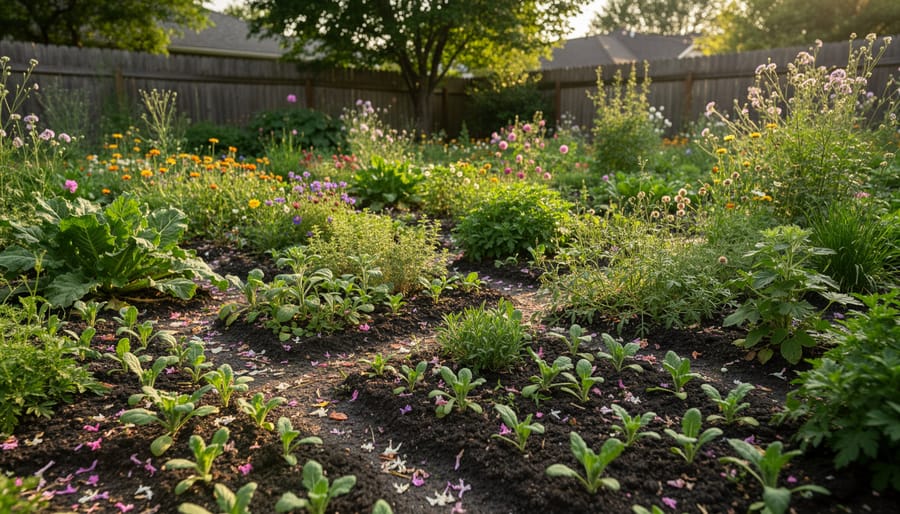
Chaos gardening flips conventional wisdom on its head. Instead of carefully spacing plants in neat rows or measuring out precise grids like square foot gardening you’re mixing seeds together and scattering them where you want plants to grow. Then you step back and let nature decide the rest.
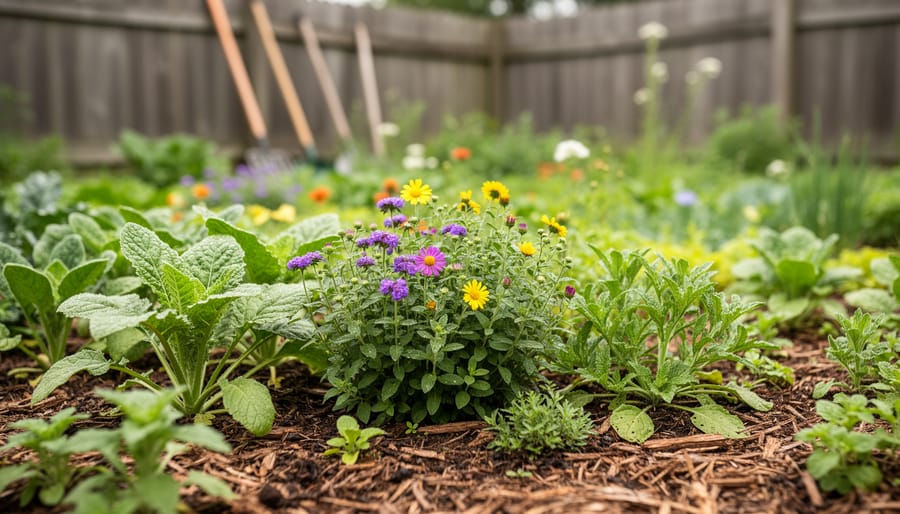
The method is beautifully simple. You choose compatible seeds, combine them in a container, and broadcast them across prepared soil. Where they land is where they grow. Some will germinate quickly and claim their space. Others will tuck into gaps you didn’t know existed. The result is an organic, unpredictable tapestry that changes every season.
- Seed bombs
- Clay-coated balls containing mixed seeds that can be tossed onto soil and left to germinate naturally when conditions are right.
- Volunteer plants
- Self-sown seedlings that appear without deliberate planting, often from seeds dropped by last season’s plants.
- Self-seeders
- Plants that readily drop their own seeds and return year after year without replanting, creating natural succession patterns.
- Companion chaos
- The unplanned but beneficial relationships that develop when compatible plants grow together randomly, supporting each other’s health.
The core principles are refreshingly straightforward. Minimal planning replaces garden blueprints and planting calendars. Maximum spontaneity welcomes whatever thrives in your specific conditions. You work with volunteers and self-seeders rather than pulling them as weeds.
This approach differs fundamentally from traditional methods. Formal garden design demands control, order, and predictable outcomes. Chaos gardening trades that certainty for discovery. You won’t know exactly which plants will dominate, where the prettiest combinations will appear, or how tall things will grow. That’s not a bug; it’s the entire point.
The Surprising Benefits of Letting Go of Control

Chaos gardening flips the traditional gardening script, and the payoffs extend far beyond your flower beds. When you stop micromanaging every square inch, you free up hours that would’ve gone into planning layouts, measuring spacing, and fussing over perfect placement. That time savings compounds through the season: less weeding between randomly spaced plants, no staking regimented rows, no guilt when life gets busy and the garden goes a few weeks without attention.
The ecological benefits surprise most gardeners first. Mixed plantings create natural diversity that confuses pests and attracts beneficial insects. A chaos garden becomes a habitat rather than a monoculture, supporting pollinators, predatory insects, and soil organisms that keep your plants healthier without chemical intervention. You’ll discover which varieties genuinely thrive in your yard’s specific conditions, that dry corner, the spot that stays damp, the microclimate near your fence, because plants sort themselves out through competition and adaptation rather than fighting your imposed plan.
The mental shift matters just as much. Chaos gardening removes the performance anxiety that kills joy for many gardeners. There’s no “right” result to achieve, no Pinterest-perfect rows to maintain, no failure when things don’t match the catalog photo. This makes it particularly valuable as a stress relief gardening approach: you’re not adding another task to perfect, you’re creating space to experiment and accept whatever emerges.
You’ll also build genuine plant knowledge faster than following rigid instructions. When you observe what actually grows well together, which seedlings dominate and which struggle, and how your garden’s unique ecosystem develops, you learn your specific plot rather than memorizing general rules. That site-specific wisdom proves more valuable than any planting guide.
How to Start Your Own Chaos Garden
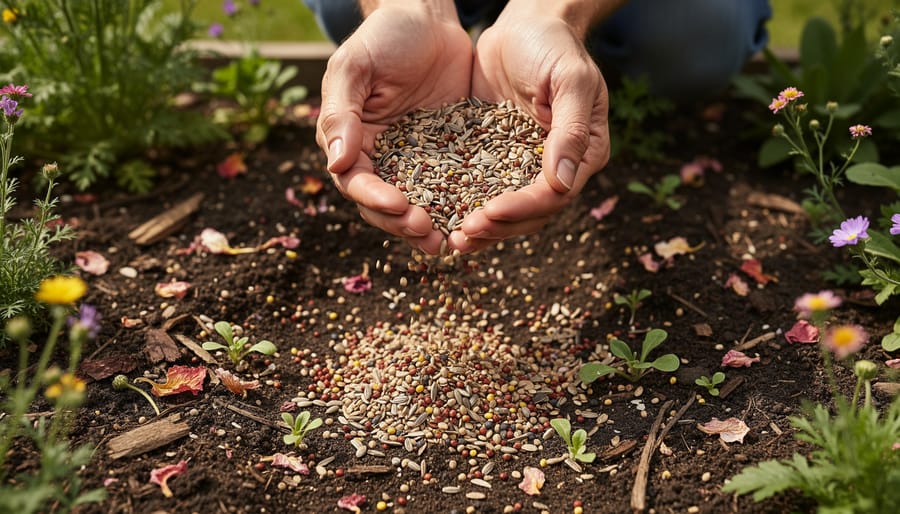
Starting a chaos garden is simpler than you might think, and you can begin with whatever space you have available. The beauty of this approach is its flexibility, whether you’re working with a 20-foot border or a single large container, the principles remain the same.
First, choose your chaos zone. Pick a spot that gets at least six hours of sunlight daily and has reasonable drainage. A corner bed works perfectly, as does a neglected strip along a fence or a cluster of pots on a patio. The key is selecting an area you can mostly leave alone without worrying about formal aesthetics. Consider your USDA hardiness zones when planning timing, but know that chaos gardening is forgiving of experimentation.
For seed selection, start with compatible mixes rather than throwing together every packet in your shed. Group plants by their needs: sun-lovers with sun-lovers, moisture-fans with moisture-fans. A summer mix might include zinnias, cosmos, marigolds, bachelor’s buttons, and nasturtiums, all fast-growing annuals that tolerate each other and attract pollinators. For edible chaos, try mixing lettuce varieties with radishes, dill, and calendula. Stick to ten species or fewer in your first attempt to avoid overwhelming yourself when identification time comes.
Preparation is minimal but not zero. Clear any aggressive perennial weeds, loosen the top few inches of soil with a fork, and rake it relatively smooth. You want decent seed-to-soil contact, not a brick-hard surface. If your soil is depleted, add a thin layer of compost and mix it in.
For summer 2026 planting, wait until evening or choose an overcast day to scatter your seeds. Pour your mix into a bowl, stir it thoroughly, then broadcast it over your prepared area using a sweeping motion. Aim for even coverage but don’t obsess, clumps and gaps are part of the chaos. Press the seeds gently into the soil with your palm or the back of a rake, then water with a fine spray. Keep the area consistently moist for the first two weeks while seeds germinate.
Expect to see the first shoots within five to ten days, though you won’t immediately know what’s what. This mystery phase is part of the charm. By week three, you’ll have a fuzzy green carpet that will gradually differentiate into distinct plants. Some areas will be dense, others sparse. That’s exactly how chaos gardening works.
Best Plants and Seed Combinations for Chaos Success
The secret to chaos gardening success isn’t random luck; it’s choosing plants that actually want to thrive together. Focus on varieties that tolerate crowding, self-seed reliably, and don’t mind a bit of competition for space and resources.
Fast-growing annuals form the backbone of most chaos mixes. California poppies, nasturtiums, and bachelor’s buttons germinate quickly, fill gaps, and reseed themselves year after year. Cornflowers and cosmos reach impressive heights without needing support, creating vertical interest wherever they land. These plants evolved in meadows and disturbed ground, so they’re perfectly adapted to the unpredictable spacing of chaos gardening.
For summer 2026 planting, look for seed packets labeled “direct sow” or “self-seeding.” Many suppliers now offer premixed chaos blends, but creating your own combination gives you more control over the balance of colors, heights, and purposes.
| Plant Type | Why It Works | Compatible Partners |
|---|---|---|
| Calendula | Self-seeds aggressively, edible flowers, attracts beneficials | Lettuce, arugula, borage |
| Nasturtium | Fast spreader, aphid trap crop, edible leaves and flowers | Radishes, beans, marigolds |
| Borage | Draws pollinators, improves soil, self-seeds freely | Strawberries, tomatoes, calendula |
| Lettuce (leaf varieties) | Fills low spaces, quick harvest, tolerates light shade | Tall flowers, root vegetables |
Edible chaos gardens work surprisingly well. Mix quick crops like radishes and arugula with flowering plants that attract pollinators. The flowers provide cover and confuse pests, while the edibles give you something to harvest while waiting for slower plants to mature. Bush beans, cherry tomatoes, and cutting lettuces all handle the chaos garden environment, though you might need to mark their locations at planting so you don’t accidentally weed them out as seedlings.
When selecting seeds, avoid aggressive thugs like mint or bindweed that will dominate everything else. Skip plants requiring precise spacing or staking, such as indeterminate tomatoes or large-headed sunflowers. Choose varieties bred for resilience rather than exhibition-quality blooms.
Managing Your Chaos (Without Losing the Magic)
The beauty of chaos gardening lies in its flexibility, but even the wildest garden needs occasional guidance. Think of yourself as a facilitator rather than a controller, your job is to keep things healthy and accessible without squashing the spontaneity that makes chaos gardening special.
Start with the basics: maintain clear paths so you can actually reach your plants. Mulch or stepping stones work well and won’t interfere with self-seeders. Beyond that, focus on the big three interventions that matter most. First, pull any truly invasive species that could escape your garden boundary, these aren’t just enthusiastic, they’re ecological threats. Second, thin overcrowded patches where seedlings are choking each other out, usually around the four-leaf stage. Keep the strongest few rather than trying to save them all. Third, watch for aggressive spreaders like mint or morning glory that can dominate everything else; these need firm boundaries or removal before they take over completely.
The light-touch approach extends to soil care too. Chaos gardens benefit from practices that support no-till soil health preserving the underground ecosystem that helps your random plantings thrive. A layer of compost scattered across bare patches each spring does more good than heavy digging.
For summer 2026 maintenance, focus on consistent watering during establishment, especially in July heat, and deadhead spent flowers if you want extended blooms rather than a single spectacular flush. If a combination isn’t working (say, sunflowers are shading out everything else), edit ruthlessly. The magic isn’t in keeping every single volunteer; it’s in curating just enough to let the best surprises shine.
Real Gardeners, Real Results: What to Expect
Chaos gardening produces wildly different results from plot to plot, and that’s exactly the point. Your patch might explode with blooms in unexpected color combinations, or you might find one species dominating while others barely appear. Some gardeners discover perfect companion pairings they never would have planned, while others learn which plants are aggressive self-seeders that need managing next year.
The challenges tend to be predictable: identifying mystery seedlings before you accidentally weed them out, dealing with one or two bullies that crowd everything else, and resisting the urge to impose order when things feel messy. The delights surprise you more often. A plant you thought failed suddenly appears in August. Beneficial insects arrive in numbers you’ve never seen. That awkward gap between the shed and fence becomes your favorite spot in the garden.
Success in chaos gardening means redefining what success looks like. Instead of judging your plot against a catalog photo, ask whether it’s supporting wildlife, producing food, bringing you joy, or teaching you something about your soil and climate. If you’re struggling to identify what’s emerged, community resources can help. Events like the iNaturalist Workshop at Wildflower Center in Austin on May 19, 2026 teach identification skills that transform confusing green tangles into recognizable plants.
The first season always involves the steepest learning curve. You’ll make mental notes about what to include or skip next time, and that’s valuable knowledge you can’t get any other way.
The beauty of chaos gardening lies not in getting it perfect, but in giving yourself permission to let go. If you’ve been putting off gardening because it feels like too much work, too much planning, or too much pressure to create something Instagram-worthy, this is your invitation to try something different.
Your chaos garden doesn’t need to look like anyone else’s. It won’t follow the rules, and that’s exactly the point. Some plants will thrive beyond your expectations. Others will surprise you by appearing where you never planted them. A few might not show up at all, and that’s fine too.
Start small if you’re hesitant. Dedicate one corner, one bed, or even just a large container to experimentation. Mix your seeds, scatter them, and see what happens. Water when it seems dry. Pull out anything that’s obviously choking everything else. Beyond that, let the garden do its thing.
The most resilient gardens are often the ones that find their own balance. By stepping back and trusting the process, you’re not abandoning your garden. You’re discovering what wants to grow in your particular patch of earth, under your care, in your climate. That’s not chaos. That’s wisdom.