12 Fall Flower Arrangement Ideas to Bring Autumn Indoors
Twelve fall flower arrangement ideas featuring seasonal blooms like dahlias, chrysanthemums, sunflowers, and autumn foliage can transform your home this season. The best arrangements pair one or two focal flowers with textured fillers, woody stems, or seed heads, then anchor the composition with rich foliage in burgundy, bronze, or golden tones. Whether you’re gathering stems from your own garden beds or visiting a local farmers market, these curated combinations work for everything from a simple kitchen vase to an elegant centerpiece.
I still remember the first time I attempted a fall arrangement. I grabbed every orange and yellow flower I could find and crammed them into a pitcher. The result looked less “autumn abundance” and more “traffic cone explosion.” That failure taught me something valuable: successful fall arrangements aren’t just about color. They’re about layering textures, heights, and shapes that echo the complexity of the season itself.
The twelve ideas ahead give you specific flower combinations and container pairings you can actually recreate. Some take five minutes and a handful of stems. Others invite you to play with more intricate designs as your confidence grows. Each one captures a different mood of fall, from the rustic charm of sunflowers and wheat bundles to the moody elegance of deep burgundy dahlias mixed with smoke bush. You’ll find options for tight budgets and splurge-worthy showpieces, arrangements that last a week and those that transition beautifully into dried displays for months of enjoyment.
How We Chose These Arrangement Ideas
When I set out to curate these twelve arrangement ideas, I wasn’t interested in creating an exhaustive catalog of every possible fall flower combination. Instead, I wanted to give you a thoughtful collection that balances inspiration with practicality, ideas you can actually recreate without needing a florist’s license or hunting down obscure blooms.
Each arrangement made the cut based on several key factors:
- Style diversity, from casual wildflower bundles to polished centerpieces, so you can match your home’s aesthetic
- Skill range, straightforward designs for newcomers alongside more ambitious projects for experienced arrangers
- Flower accessibility, blooms you can grow yourself, find at farmers markets, or pick up at grocery stores
- True seasonal timing, flowers that actually peak in autumn, not summer holdovers masquerading as fall options
- Visual impact, combinations that photograph beautifully and make guests ask “where did you get that?”
I also prioritized arrangements that teach something useful. The monochromatic marigold design, for instance, demonstrates how restricting your color palette can create unexpected drama. The pumpkin vase project shows that containers matter as much as flowers themselves. Some ideas favor fresh blooms, while others embrace dried materials that last months rather than days.
The goal was balance: enough variety to keep things interesting, but enough practical guidance that you’ll finish reading with clear next steps rather than vague inspiration. These aren’t just pretty pictures, they’re blueprints you can follow.
1. Classic Chrysanthemum and Aster Centerpiece
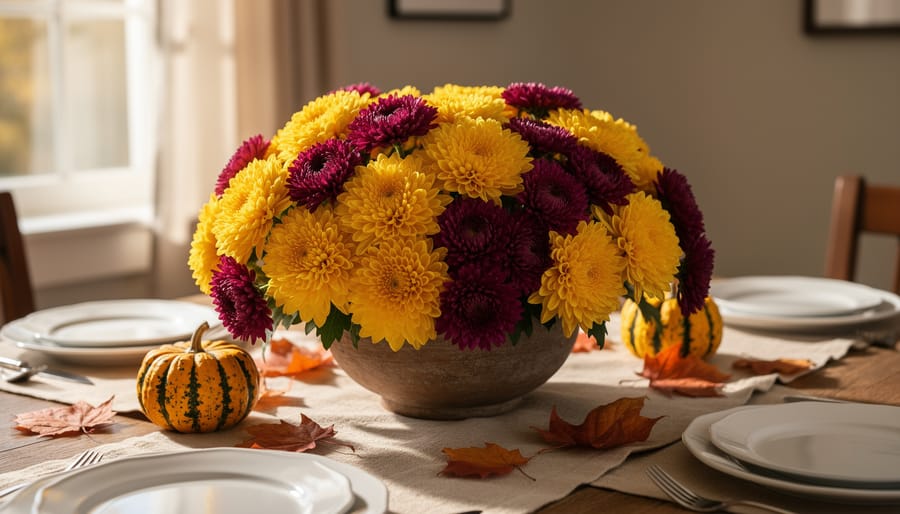
This timeless combination is perfect for newcomers to flower arranging because both chrysanthemums and asters are forgiving, long-lasting, and require minimal fussing. The pairing works beautifully because the rounded, full blooms of mums provide structure and volume, while the delicate, daisy-like asters add movement and a lovely color contrast.
For the mums, choose varieties in classic autumn shades, burnt orange, deep burgundy, golden yellow, or russet bronze. Then pair them with purple or lavender asters to create visual interest without overwhelming the design. The warm-cool color combination feels naturally autumnal yet sophisticated enough for a dining table or entryway.
A low, wide container works best for this centerpiece style. Look for ceramic bowls, vintage crocks, or even repurposed pie tins in cream, copper, or matte black. The key is choosing something that won’t compete with your flowers. Fill your container about three-quarters full with water, then start by placing your largest mum blooms to establish the arrangement’s outline and height. Tuck asters around and between the mums, letting some extend slightly beyond the edges for a relaxed, organic shape.
This arrangement typically lasts seven to ten days with proper care, making it ideal for fall gatherings or seasonal decorating. Change the water every couple of days and trim stems at an angle to keep everything fresh.
2. Sunflower and Wheat Bundle
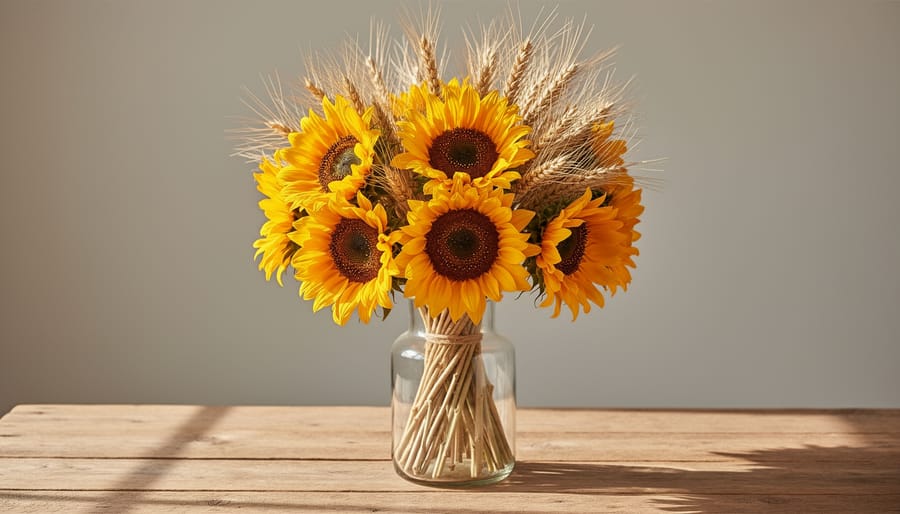
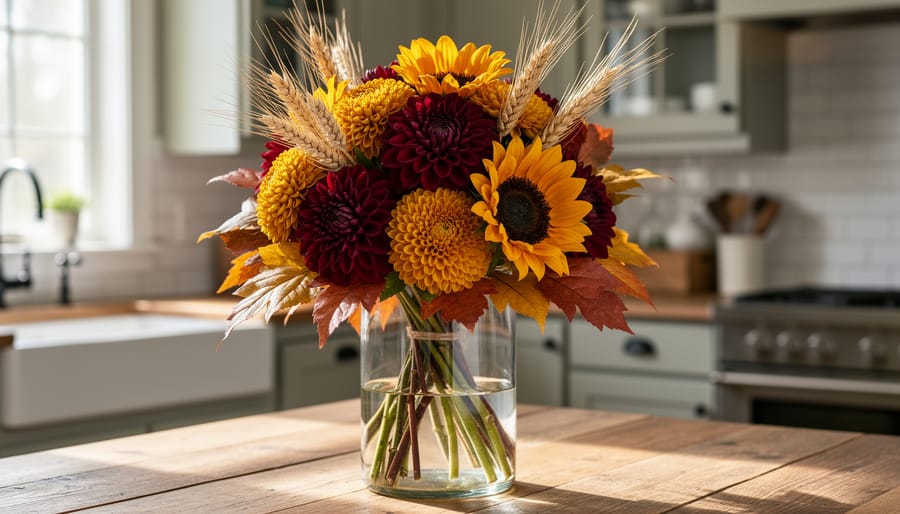
Late-season sunflowers bring pure sunshine to fall arrangements, and pairing them with dried wheat stalks creates that perfect rustic farmhouse vibe. I love this combination because it’s forgiving for beginners while looking impressively abundant.
Start with three to five sunflowers (the smaller varieties like ‘Teddy Bear’ or ‘Autumn Beauty’ work especially well), and gather a generous handful of wheat stalks, about twice as many as you have sunflowers. The wheat provides crucial structural support while adding that harvest-season texture that screams autumn.
The trick to preventing toppling is working from the outside in. Position your wheat stalks around the perimeter of your container first, creating a supportive cage. This framework holds everything in place while keeping the arrangement looking natural rather than overly engineered. Then nestle your sunflowers into the center, letting their heavy blooms rest against the wheat for support.
Choose a substantial container with some weight to it, a vintage crock, wide mason jar, or ceramic pitcher works beautifully. The container should be at least one-third the height of your finished arrangement. Fill it with fresh water to keep those sunflower stems drinking happily.
This arrangement gains character as it ages. The sunflowers will dry beautifully over the next few weeks, and the wheat stays gorgeous indefinitely, giving you an arrangement that transitions gracefully through the entire season.
3. Dahlia and Berry Branch Display
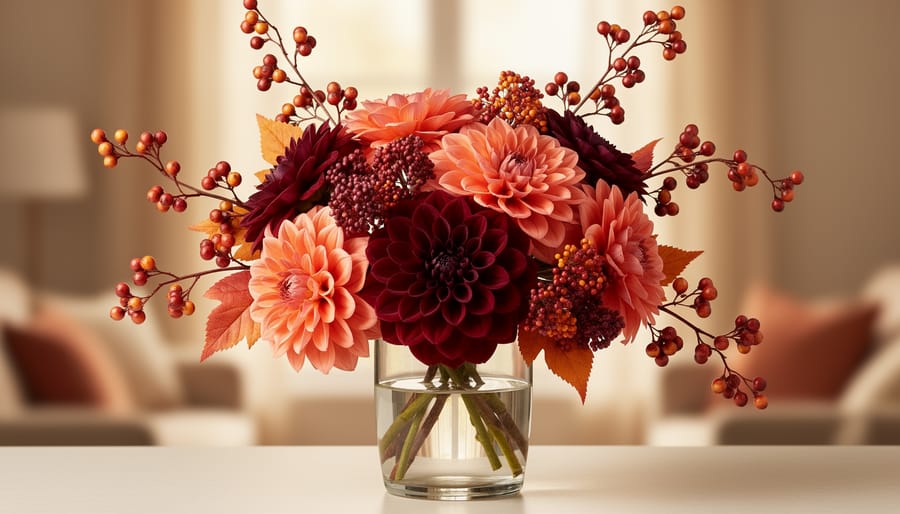
Dahlias are the showstoppers of late summer and early fall, and when paired with vibrant berry branches, they create an arrangement that feels both luxurious and seasonally grounded. I love working with dinner-plate dahlias in deep burgundy or warm coral, these bold blooms command attention and set the tone for the entire arrangement.
The key to success with dahlias lies in proper stem conditioning. Cut stems at a sharp angle and immediately plunge them into deep water for at least two hours before arranging. Dahlias have hollow stems that can collapse easily, so some arrangers gently insert a thin floral wire up through the stem for extra support, though I find this usually isn’t necessary if you’re working with fresh-cut flowers and providing adequate water depth.
For berries, bittersweet branches offer those gorgeous orange capsules that split open to reveal red berries, while rose hips provide a more subtle complement with their round, tomato-red fruits. These woody stems add structure and help frame the dahlias without competing for attention. Strip any foliage that will sit below the waterline to prevent bacterial growth, which dahlias are particularly sensitive to.
Use a heavy container with a wide mouth to accommodate the large dahlia heads, they can become top-heavy and tip lighter vases. Arrange the berry branches first to create your framework, then nestle the dahlias among them, varying the heights slightly to create visual interest rather than a flat, uniform surface.
4. Monochromatic Marigold Collection
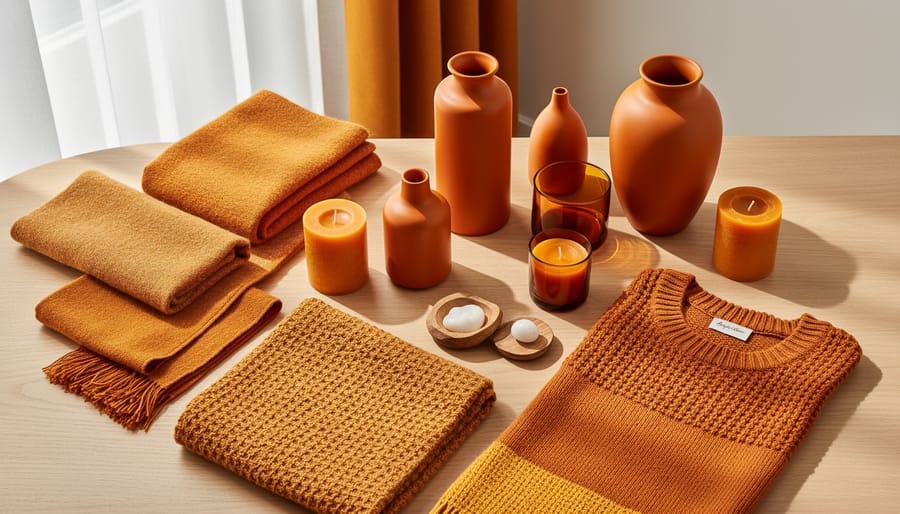
There’s something bold and unapologetic about an arrangement that commits fully to one color family, and marigolds are perfect for this approach. I’ve filled entire vases with nothing but marigolds in shades ranging from pale lemon to deep burnt orange, and the result is always more striking than expected.
The key to making a monochromatic arrangement interesting is working with tonal variation and different flower sizes. Use French marigolds (the compact, button-like blooms), African marigolds (those big, ruffled pompoms), and signet marigolds (smaller, delicate flowers) all in the same color range. The contrast in scale creates visual depth that multiple colors would otherwise provide.
Layer your colors intentionally. I like placing the darkest, richest oranges at the base and center, then gradually working toward lighter golds and peachy tones at the edges and top. This creates dimension and prevents the arrangement from looking flat or one-note.
Don’t shy away from including marigold foliage, either. The ferny, aromatic leaves add texture and their deep green actually intensifies the perception of your oranges and golds rather than breaking the color story. A simple ceramic pitcher or terracotta pot complements the warm tones beautifully without competing for attention.
5. Ornamental Kale and Sedum Cluster
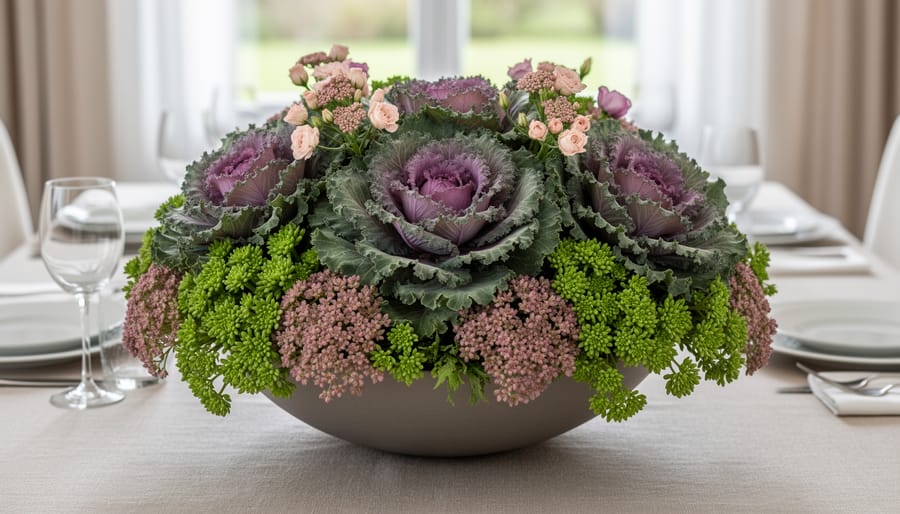
This low-profile arrangement delivers weeks of beauty without wilting, making it perfect for dining tables where you want color that lasts through multiple meals and gatherings. The secret is combining ornamental kale, those frilly, purple-and-green rosettes you see in fall gardens, with sedum and other hardy succulents that maintain their structure long after traditional cut flowers would fade.
Start with a wide, shallow container, a ceramic bowl or wooden tray works beautifully. Fill it with moistened floral foam or simply pack it with damp moss if you want a more organic look. Nestle ornamental kale heads as your focal points, spacing them evenly across the arrangement. Their ruffled texture and gradient coloring (deep purple edges fading to creamy centers) provide instant visual interest.
Fill in between the kale with sedum cuttings, ‘Autumn Joy’ and ‘Angelina’ varieties offer gorgeous bronze and gold tones. Tuck in rosettes of echeveria or sempervivum for contrasting shapes. Add texture with sprigs of dusty miller or eucalyptus for silvery contrast.
The beauty of this arrangement is its durability. The kale will hold for two to three weeks if you keep the base moist, and the succulents can actually root in the arrangement, especially if you use moss instead of foam. I’ve had tablescapes transition from fresh arrangements into planted displays that lasted months. This is ideal for anyone who wants impressive fall decor without daily maintenance or the guilt of watching flowers wilt before a dinner party ends.
6. Zinnia and Celosia Mix
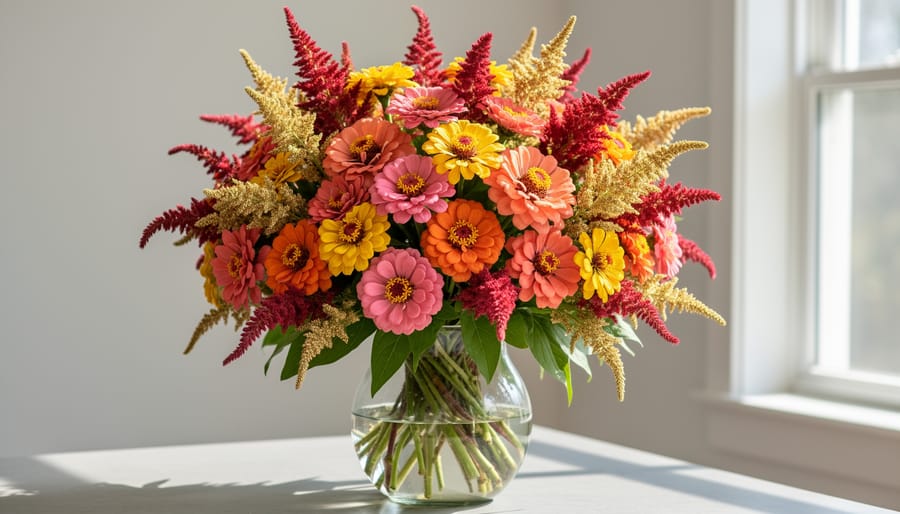
For gardeners who love a riot of color, this arrangement celebrates abundance with the last hurrah of the zinnia season. Late-blooming zinnias in hot pink, coral, and burgundy create a vibrant base, while the velvety, feathered plumes of celosia in wine red and burnt orange add dramatic texture and vertical interest.
The secret to this cottage-garden style lies in generous volume. Don’t be shy, pack the flowers closely together to create that lush, overflowing effect. Start by placing your tallest celosia stems to establish height, then fill in around them with zinnias at varying heights. The contrast between zinnia’s flat, daisy-like faces and celosia’s soft, sculptural plumes creates visual excitement without feeling chaotic.
Both flowers are workhorses that last well in the vase. Strip all foliage below the waterline and recut stems at an angle every few days. Zinnias sometimes develop hollow stems that can trap air bubbles, so give them a fresh cut before arranging.
This combination works beautifully in a wide-mouthed ceramic pitcher or vintage crock where the informal, abundant style can really shine. The result looks like you just gathered an armload of blooms from a bountiful garden, exactly the feeling fall should evoke.
7. Japanese Anemone and Foliage Focus
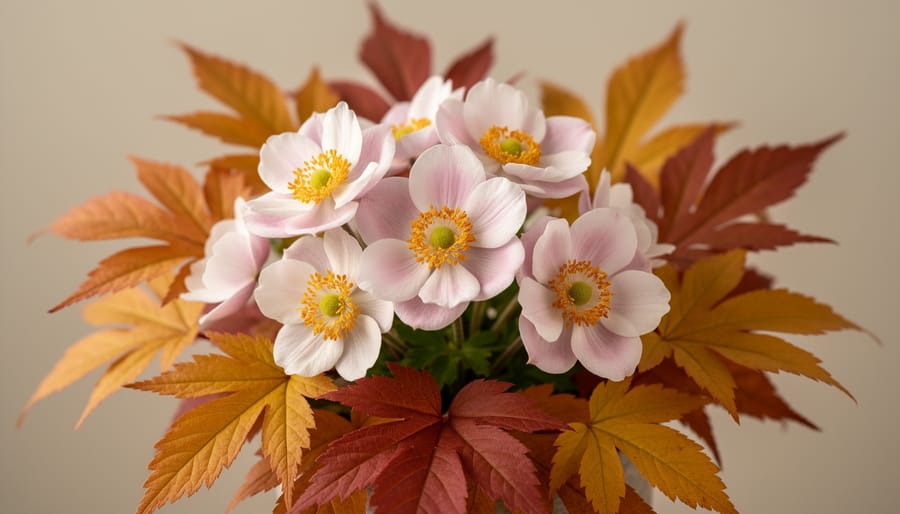
Japanese anemones bloom well into autumn, offering delicate white or pink flowers that seem to float on wiry stems. But here’s where this arrangement breaks from tradition: the flowers aren’t the main event. Instead, they’re graceful accents within a stunning backdrop of fall foliage.
Gather branches of maple leaves turning crimson, oak leaves in russet and bronze, and viburnum foliage that shifts to deep burgundy. The key is selecting leaves at various stages of color change, some still holding green edges, others fully transformed. This creates natural gradation and depth that a single foliage type can’t achieve.
Start by building your foliage framework in a wide, low vessel. Strip lower leaves from branches so stems can reach water, then arrange them to create a colorful nest. Tuck three to five Japanese anemone stems among the leaves, placing them at different heights. Their simple, papery blooms and prominent yellow centers provide delicate contrast against the bold foliage shapes.
This approach works beautifully when your garden offers abundant leaves but limited flowers. The foliage does the heavy lifting colorwise, while the anemones add movement and a touch of softness. It’s particularly striking for dinner parties, sophisticated without being fussy, and the low profile keeps sightlines clear across the table.
Change the water every other day, as leaves can decompose faster than flower stems.
8. Dried Hydrangea and Pampas Grass Statement Piece
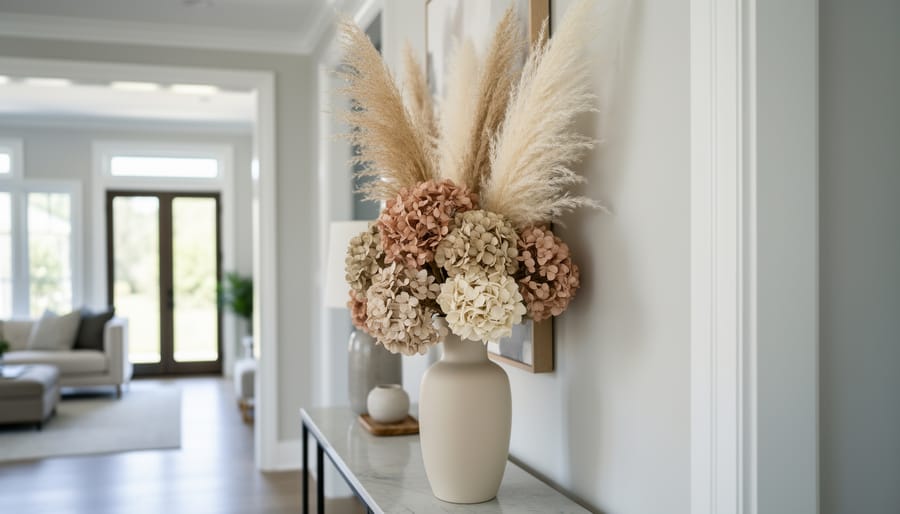
This arrangement brings the elegance of late-season hydrangeas together with the soft, feathery drama of pampas grass for a statement piece that lasts months. It’s perfect for those high-impact spots where you want texture and presence, think mantels, console tables, or flanking an entryway, and the best part is these materials actually improve with time rather than wilting.
The trick to getting those gorgeous, papery hydrangeas is knowing when to cut them. You want blooms that have been on the plant through several cool nights and have started to feel slightly papery to the touch rather than fresh and supple. Too early and they’ll simply droop; at the right stage, they’ll hold their shape beautifully as they finish drying indoors.
For the arrangement itself, choose a substantial vessel that can handle the visual weight of tall pampas plumes. Start by placing three to five pampas stems at varying heights to create your structure, then fill in with dried hydrangea heads clustered at different levels. The contrast between the airy pampas and the denser hydrangea creates compelling visual interest. You can leave the arrangement dry (no water needed), or place stems in a small amount of water initially if some hydrangeas are still transitioning.
This arrangement practically takes care of itself. An occasional light dusting is all it needs, and if you spray the pampas lightly with hairspray, you’ll minimize shedding. Many people keep these arrangements well into winter, simply because they continue looking beautiful.
9. Cosmos and Goldenrod Wildflower Bouquet
Late-season cosmos bring an unexpected softness to fall arrangements, their delicate petals in pink, white, and burgundy creating a dreamy contrast against autumn’s heavier blooms. Paired with goldenrod’s sunny yellow plumes, this combination captures the essence of a September meadow, loose, light, and utterly charming.
This arrangement works beautifully in a simple glass jar or vintage pitcher. The trick is letting the flowers do what they naturally want to do rather than forcing them into rigid positions. Cosmos stems bend and curve gracefully, so embrace their movement. Cut goldenrod at varying heights and use it as a filler throughout rather than clustering it all together. Tuck cosmos stems in loosely, allowing some to lean outward while others stand upright.
One thing I love about this pairing is how it softens goldenrod’s sometimes-polarizing brightness. The airy cosmos blooms diffuse that intense yellow into something romantic and autumnal without losing the cheerful energy. For added texture, consider including a few stems of wild asters or dried grasses from your garden.
This arrangement has a short but glorious lifespan, typically four to six days. Change the water daily and trim stems every couple of days to extend the show.
10. Rose and Chinese Lantern Accent Arrangement
This arrangement proves that fall doesn’t mean abandoning romance, it just takes on a warmer palette. Pair roses in peachy apricot, soft coral, or butter-cream shades with the papery orange lanterns of Physalis alkekengi, and you get an unexpected mix of delicate and architectural that feels both elegant and seasonal.
The Chinese lantern pods are the secret weapon here. Their bright orange husks look almost translucent when backlit, creating dramatic focal points that contrast beautifully with the soft, layered petals of fall roses. Snip the lantern stems at varying heights, some tall and some shorter, to create visual rhythm without overwhelming the roses.
Start with your roses as the foundation, clustering three to five blooms at slightly different levels. Then tuck the Chinese lantern stems around the perimeter and through the arrangement, letting a few extend higher than the roses for dimension. The key is restraint: too many lanterns turn the arrangement busy, but just enough frames the roses like natural spotlights.
If you grow fall flowers in your own garden, harvest Chinese lanterns when the pods have fully colored but before they become too fragile. Roses cut in the morning last longest, choose blooms that are just starting to open rather than fully blown.
This pairing works in both rustic containers and sleek modern vases. The warm tones photograph beautifully and hold up well for five to seven days with fresh water and daily stem trims.
11. Salvia and Ornamental Pepper Display
If you’re ready to move beyond the expected autumn palette, this arrangement offers a stunning surprise. Pairing the cool spikes of blue or purple salvia with the glossy, jewel-toned fruits of ornamental peppers creates a conversation-starting display that feels both modern and playful.
The magic here is in the contrast. Salvia’s vertical, textured blooms in deep indigo or violet provide a calming backdrop, while ornamental peppers, available in shades ranging from cream and yellow to orange, deep purple, and fiery red, add unexpected pops of color and a waxy, almost sculptural quality. This combination works beautifully in low, wide containers where you can appreciate the peppers at eye level.
Start by placing your salvia stems to establish height and structure, then tuck clusters of pepper-laden branches lower in the arrangement to create visual weight. The peppers are quite sturdy and last remarkably well, often outlasting traditional cut flowers. You can even pot young ornamental pepper plants and nestle them directly into the arrangement for extended life, perfect if you’re working with tiny space planting techniques and want to maximize what you’ve grown.
Don’t be afraid to incorporate other unconventional elements: purple basil leaves, sprigs of rosemary, or even small chili peppers from your kitchen garden. The key is embracing the unexpected while maintaining balance between your cool-toned flowers and warm-toned accents.
12. Mini Pumpkin Vase with Asters
This arrangement is pure autumn whimsy and a wonderful way to showcase homegrown blooms in an unexpected vessel. Choose a mini pumpkin that sits flat and stable, roughly 4 to 6 inches in diameter. Cut a circle from the top large enough to fit a small glass jar or votive holder, about 2 to 3 inches across. Use a sharp knife to trace your circle, then scoop out the flesh and seeds with a spoon, creating a cavity deep enough for your container. This is crucial: never add water directly to the hollowed pumpkin, as it will rot quickly. Instead, nestle a water-filled jar inside to hold your stems.
Fill the hidden jar with fresh water and add compact fall flowers like asters, button mums, or short-stemmed zinnias. Keep the arrangement low and rounded so it complements the pumpkin’s shape rather than towering over it. Tuck in a few sprigs of sedum or small oak leaves around the base to hide the jar’s rim and create a seamless transition between pumpkin and flowers.
These little vase-pumpkins make charming place settings for a harvest dinner or clustered groupings on a mantel. They typically last five to seven days before the pumpkin starts to soften, so create them close to when you plan to display them. The project takes just minutes and brings together everything wonderful about fall, from planning a garden bed in spring to celebrating the harvest months later.
Essential Tips for Long-Lasting Fall Arrangements
The secret to arrangements that look fresh for weeks instead of wilting within days starts the moment you cut your stems. Always use sharp, clean pruners or scissors and make angled cuts, which create more surface area for water uptake than blunt, straight cuts. I’ve learned this the hard way, after watching a gorgeous dahlia arrangement droop overnight because I used dull kitchen shears that crushed the stems instead of cutting cleanly.
Water temperature matters more than most people realize. Start with lukewarm water rather than cold straight from the tap. Fall flowers, especially late-season blooms like chrysanthemums and asters, absorb tepid water more readily. Change the water every two to three days, rinsing the container thoroughly to prevent bacterial growth that clogs stems and shortens vase life.
Placement is critical during autumn when many of us start running heat. Position your arrangement away from radiators, heating vents, and sunny windowsills. The warmth that feels cozy to us dehydrates flowers quickly. I keep mine on a dining table away from the woodstove, and they easily last twice as long as arrangements near heat sources.
Strip all foliage that will sit below the waterline, those submerged leaves decay rapidly and cloud the water with bacteria. For flowers like dahlias and zinnias with hollow stems, some arrangers flip the stem upside down, fill it with water, then plug the end with cotton before placing it in the vase. This trick works beautifully for preventing air pockets.
Commercial flower food isn’t just marketing, the mixture of sugar (for energy), acidifier (to lower pH), and bactericide genuinely helps. If you’re practicing succession planting in your garden and cutting fresh blooms regularly, keep flower food packets on hand. Without it, a tablespoon of sugar plus a few drops of bleach per quart of water makes an effective homemade substitute.
Common Questions About Fall Flower Arrangements
What are the best fall flowers for beginners?
Start with chrysanthemums, marigolds, and zinnias, they’re forgiving, widely available, and last well in arrangements. These flowers have sturdy stems and don’t require special conditioning techniques, making them perfect for building confidence.
Where can I find seasonal fall flowers?
Check your local farmers’ markets first for the freshest, most seasonal blooms. Many grocery stores stock fall flowers in September and October, and if you have a small garden layout you can easily grow your own mums, zinnias, and marigolds for cutting.
How long do fall flower arrangements typically last?
Most fall arrangements last five to ten days with proper care, though hardier flowers like chrysanthemums can push two weeks. Dahlias and roses tend toward the shorter end, while asters and marigolds are surprisingly long-lasting.
Should I use floral foam or chicken wire for fall arrangements?
Chicken wire is more sustainable and works beautifully for most fall arrangements, especially those with sturdy stems like sunflowers and dahlias. Save floral foam for arrangements that need precise placement or very delicate stems that won’t push through wire.
Can I transition my summer garden flowers into fall arrangements?
Absolutely, zinnias, cosmos, and roses often bloom well into fall and pair beautifully with autumn foliage and grasses. The key is combining late-season blooms with distinctly fall elements like colored leaves, seed pods, or wheat to shift the overall feel.
Do fall flowers need different care than spring or summer blooms?
Fall flowers generally prefer cooler conditions and may actually last longer because of lower temperatures in your home. Keep arrangements away from heating vents that kick on in autumn, and change water every two days since bacteria grows more slowly in cool weather.
I learned this last tip the hard way when I placed a gorgeous dahlia arrangement on a side table, right above a floor vent I’d forgotten about. Within two days, those stunning blooms looked exhausted. Now I treat early fall like a second spring for arranging, taking advantage of comfortable room temperatures before the heat comes on, and my arrangements reward me with noticeably longer vase life.
The beauty of fall flower arranging is that there’s no single right way to do it. Each of these ideas is a starting point, not a rigid formula. Mix elements from different arrangements, swap flowers based on what you find at your local market or in your own garden, and trust your instincts about what looks good to you.
I still remember the first fall arrangement I created, an uneven handful of grocery store mums stuffed into a mason jar. It wasn’t remotely balanced or professionally styled, but it sat on my kitchen table and made me smile every morning. That’s really what seasonal arranging is about: capturing a piece of autumn’s warmth and bringing it into your daily life.
Fall gives us this incredibly forgiving palette to work with. Those rich oranges, deep burgundies, and golden yellows are nearly impossible to clash. The textures of seed heads, dried grasses, and late-season blooms all play well together. You’re working with nature’s own color story, which means your arrangements will feel cohesive even when you’re improvising.
So grab some flowers, choose a container, and start arranging. The only real mistake would be not trying at all.