Why Serious Gardeners Are Talking About Research Peptides (And What You Need to Know)
Research peptides are biologically active compounds scientists use to study plant growth, stress response, and disease resistance, but they aren’t something most home gardeners will buy peptides for their backyard beds. These specialized molecules, which play crucial roles in how plants communicate internally and respond to their environment, remain largely confined to university labs and commercial agricultural research facilities in 2026.
If you’ve stumbled across the term while hunting for ways to supercharge your tomatoes or rescue a struggling rose bush, you’re probably wondering whether these peptides could revolutionize your garden the way they’re transforming research into crop resilience and yield. The short answer? Not yet, and maybe not ever in the way you might imagine.
I first encountered plant peptides during a conversation with a university researcher at a spring gardening expo three years ago. She explained how these tiny protein fragments help plants recognize threats, trigger immune responses, and even regulate growth patterns. Fascinating stuff, but when I asked if I could use them in my own vegetable patch, she laughed gently and pointed out that commercial applications were still years away from garden center shelves.
The disconnect between laboratory research and practical gardening applications is significant. While scientists have identified hundreds of signaling peptides that influence everything from root development to drought tolerance, translating that knowledge into products homeowners can actually use requires extensive testing, regulatory approval, and economic viability. What works in controlled greenhouse conditions doesn’t always scale to real-world gardens where soil biology, weather patterns, and countless other variables come into play.
What Research Peptides Actually Are (In Plain English)
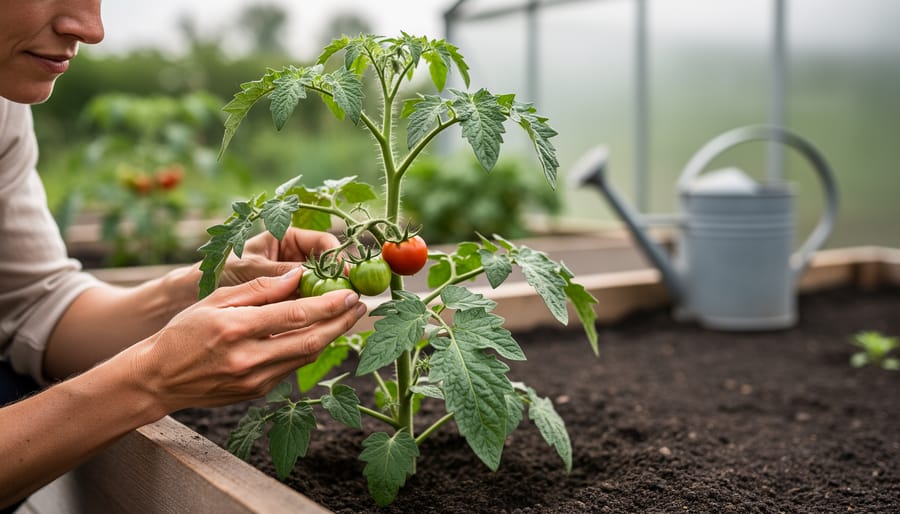
Let me start by clearing up what peptides actually are, because the term gets thrown around a lot these days and it can sound intimidatingly scientific. At their simplest, peptides are short chains of amino acids, the same building blocks that make up proteins. Think of them as sentences where each amino acid is a word. While proteins can be whole chapters (sometimes hundreds of amino acids long), peptides are more like text messages: short, specific, and designed to deliver a particular signal.
Your garden is already producing thousands of different peptides right now, whether you know it or not. Every plant, from your heirloom tomatoes to that stubborn weed you can’t seem to get rid of, manufactures peptides constantly as part of normal growth and development. They’re natural compounds that plants have been using for millions of years to coordinate everything from root growth to flowering to defense responses.
What makes peptides fascinating is their role as biological messengers. When a plant cell needs to communicate with its neighbours, say, to warn about an approaching pest or to coordinate a growth spurt, it often does so by releasing specific peptide messengers in plants. These tiny molecules drift to nearby cells, dock onto receptors, and trigger precise responses. It’s remarkably elegant when you think about it.
The “research” part of research peptides simply means these are peptides being studied in laboratories to understand exactly how they work. Scientists isolate specific peptides, synthesize them, and test their effects in controlled conditions. The peptides themselves aren’t some newfangled invention, they’re copies or variations of what plants already make naturally. The goal is to figure out which peptides do what, and whether we might eventually harness that knowledge to help plants grow stronger, resist stress better, or fight off diseases more effectively.
The Peptide Revolution in Plant Science
From Laboratory to Field
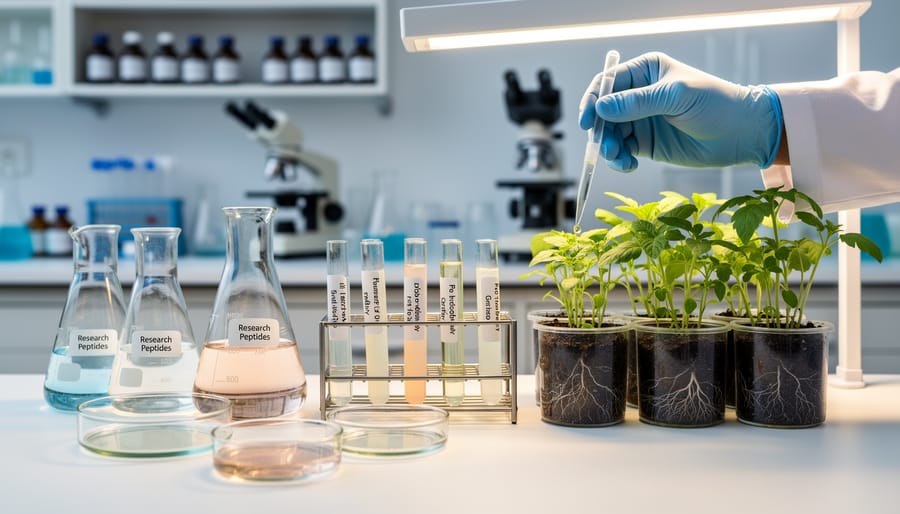
The journey from laboratory bench to backyard garden bed is longer than you might think, but it’s happening. Right now, agricultural researchers are conducting field trials with peptide-based treatments on commercial crops, testing what worked in petri dishes against the chaos of real weather, soil microbes, and hungry insects.
These trials typically start small. A university research farm might treat one row of tomatoes with a peptide formulation designed to trigger drought resistance, leaving control rows untreated. Researchers measure everything: water uptake, fruit size, plant survival rates during heat waves. When results look promising, the trials expand to working farms across different climates and soil types.
What excites me most is how quickly some discoveries are moving forward. Peptide treatments that enhance root development showed such strong results in wheat and corn trials that several agricultural companies are now developing commercial formulations. These aren’t genetically modified organisms, they’re biostimulants that work with a plant’s existing biology.
For home gardeners, this means we’re probably three to five years away from seeing peptide-enhanced products at garden centers. The technology needs to prove itself economically viable for large-scale agriculture first, then manufacturing costs drop enough for consumer products. It’s the same path that brought us beneficial bacteria inoculants and mycorrhizal fungi treatments, which seemed impossibly scientific a decade ago but now sit on regular garden shop shelves.
What Researchers Are Learning About Plant Communication
Plants are having conversations we’re only just beginning to eavesdrop on, and peptides are doing much of the talking. When a tomato plant detects an aphid attack, it releases specific peptide signals that travel through its vascular system like an alarm system, triggering defense compounds in leaves the pest hasn’t reached yet. Even more remarkable, those same signals can escape into the soil, warning neighboring plants to raise their own defenses.
Drought research has revealed that certain peptides act as stress reporters, helping roots sense water availability and adjust growth accordingly. A dehydrated plant releases peptides that slow cell expansion in leaves while directing resources to deeper root development, a survival strategy far more sophisticated than we’d imagined.
Scientists are also decoding growth-regulating peptides that control everything from how many stomata (breathing pores) a leaf develops to when lateral shoots should form. These aren’t random processes; they’re coordinated conversations between tissues. Understanding this chemical dialogue is opening doors to helping plants help themselves, which beats forcing them into unnatural responses through heavy-handed interventions.
The Research Peptides Market: Understanding What’s Out There
If you search “research peptides for sale” online, you’ll find a landscape that’s quite different from your typical gardening supplier. Most vendors selling research peptides operate in the scientific supply sector, catering to laboratories rather than the local garden center crowd. These companies provide highly purified, documented compounds to universities conducting plant biology research, agricultural research institutions testing stress responses, and biotech firms developing the next generation of crop treatments. The peptides come with certificates of analysis, purity specifications, and explicit labeling for research use only.
This isn’t just legal fine print. Research peptides are expensive, often sold in tiny quantities measured in milligrams, and lack the formulation work needed to make them stable and effective in real-world soil conditions. A vial that costs $200 might contain enough peptide for a single experiment, not for treating your vegetable patch. They’re also sold without application instructions for gardens because that’s not what they’re meant for. The people buying these products are running controlled trials, measuring cellular responses under microscopes, and publishing peer-reviewed papers.
What’s particularly important for gardeners to understand is that even though the research is happening with plants, the jump from laboratory discovery to backyard application takes years. Those peptides need to be tested for safety at scale, formulated to survive UV light and soil microbes, and proven effective outside sterile lab conditions. The agricultural companies licensing this research are the bridge between academic discoveries and the products that might eventually reach us. They’re the ones who’ll turn promising peptide research into something stable enough to sit on a shelf and simple enough for gardeners to use confidently. Until then, what’s “for sale” serves science, not gardens.
How This Research Could Change Your Garden (Eventually)
Stress-Resistant Plants Without Genetic Modification
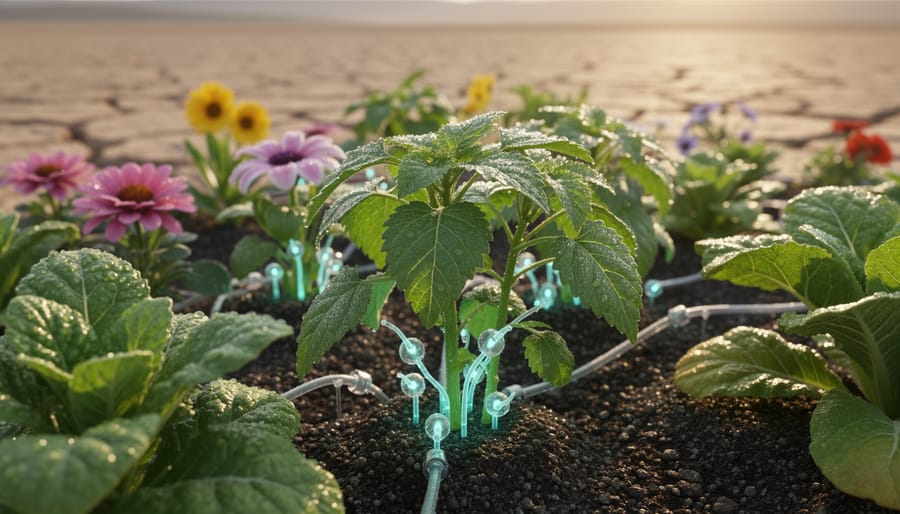
Picture this: your tomatoes shrugging off a week of 95-degree days, your lettuce staying crisp through an unexpected cold snap, all without crossing into GMO territory. That’s the promise researchers see in peptide-based treatments that work with your plants’ existing biology rather than rewriting it.
Unlike genetic modification that permanently alters a plant’s DNA, peptide applications would essentially send temporary biological text messages: “Hey, time to beef up those heat-shock proteins” or “Activate drought-response mode.” The plant already knows how to do these things; peptides just help trigger the right responses at the right time. Early studies show treated plants maintaining better leaf turgor during drought and recovering faster from cold damage.
For home gardeners working in challenging microclimates, even in contained spaces like square foot gardening where every plant counts, this could mean fewer losses to weather extremes. The peptides would eventually break down naturally, leaving no residue, making them particularly appealing for organic growers who want science-backed solutions without compromising their principles. We’re likely years away from retail products, but the research trajectory looks genuinely promising.
Boosting Your Garden’s Natural Defenses
Peptide research is unlocking new possibilities for organic approaches to pest and disease management, and the results are intriguing for anyone dreaming of healthier, more resilient gardens. Scientists have discovered that certain peptides act as messengers that alert plants to pest attacks or disease threats, sort of like an early warning system. When triggered, these signals can prompt a cascade of natural defense responses, think defensive compounds or cell-wall reinforcements, without relying on synthetic pesticides.
What does all this mean for gardeners? Imagine a future where you could treat your tomatoes or roses with a peptide-based spray derived from naturally occurring plant messengers. The goal wouldn’t be to kill pests outright, but rather to “coach” your plants to mount their own defenses before a threat becomes overwhelming. This approach has the potential to reduce our reliance on chemical sprays and cut down on resistance issues that plague traditional pesticides.
Researchers are particularly interested in peptides that help plants recognize specific pathogens or chewing insects. They’re experimenting with biostimulant prototypes that might someday find their way into consumer products. While these options are still in the research phase, the idea of boosting your garden’s natural immune system with nature’s own defense signals is an exciting possibility on the horizon.
What You Can Do Right Now
You can’t walk into a garden center and buy peptides off the shelf, but that doesn’t mean you’re stuck waiting for the future. Your plants already produce these powerful signaling molecules, and the smartest move you can make is creating conditions that let them do it well.
Think of it like this: peptides are your plants’ internal communication network, and healthy plants send clearer signals. When soil life thrives, when nutrients are balanced, and when stress stays manageable, your tomatoes and roses optimize their own peptide production without any intervention from a lab.
Here’s what works right now in your garden:
- Build living soil first. Start no till practices this season if you haven’t already. Every time you turn soil, you disrupt the bacterial and fungal communities that support plant peptide signaling. Let the biology do its job.
- Feed the soil, not just the plants. Compost adds the organic matter that fuels microbial diversity. If you’re not composting yet, choose a compost bin that fits your space and start this week.
- Water deeply but less frequently. Consistent moisture swings train plants to produce stress-response peptides more efficiently. Shallow daily watering keeps roots lazy.
- Match plants to your climate. Check the USDA zone map and grow what naturally thrives where you live. Plants fighting constant environmental stress can’t optimize their internal systems.
- Use diverse plantings. Monocultures limit the range of beneficial soil organisms. Mix herbs, flowers, and vegetables to create the microbial complexity that supports robust plant communication.
I’ve watched gardeners chase the latest products for years, but the ones with the healthiest gardens always come back to these fundamentals. Last spring, my neighbor spent a fortune on specialized fertilizers while I focused on compost and mulch. By July, my pepper plants were outperforming his by every measure, not because I had access to research peptides, but because I’d created the conditions where my plants’ natural systems could excel.
The research happening in laboratories today will eventually reach your garden as practical tools. Until then, your job is straightforward: build great soil, reduce plant stress, and let biology work. You’re already supporting your plants’ peptide production every time you add compost, plant a cover crop, or mulch a bed. That’s not waiting for the future. That’s good gardening, and it’s never been more relevant than right now.
Standing in my garden on a summer evening, watching bees work the lavender while tomatoes ripen on the vine, I think about those peptide researchers in their labs. They’re unlocking secrets about how plants communicate, defend themselves, and thrive. And yet, here I am with my watering can and compost bin, growing food and flowers the same way gardeners have for generations.
That’s the beauty of it, really. You don’t need to wait for tomorrow’s breakthroughs to grow a magnificent garden today. The fundamentals still work: healthy soil teeming with life, plants matched to your climate, water when needed, patience when required. But knowing what’s happening at the molecular level, understanding that your plants are constantly sending chemical messages and responding to their environment, makes every trip to the garden more fascinating.
The research peptides being studied in universities today might transform how we garden a decade from now. Or they might simply confirm what experienced gardeners already know through observation and practice: that plants are far more sophisticated than we give them credit for, that supporting their natural systems works better than fighting against them, and that the best gardens are grown with both knowledge and intuition.
Keep reading about the science. Stay curious about how plants work. But don’t forget to get your hands dirty and pay attention to what your garden tells you. That’s where the real learning happens, whether peptides are involved or not.